
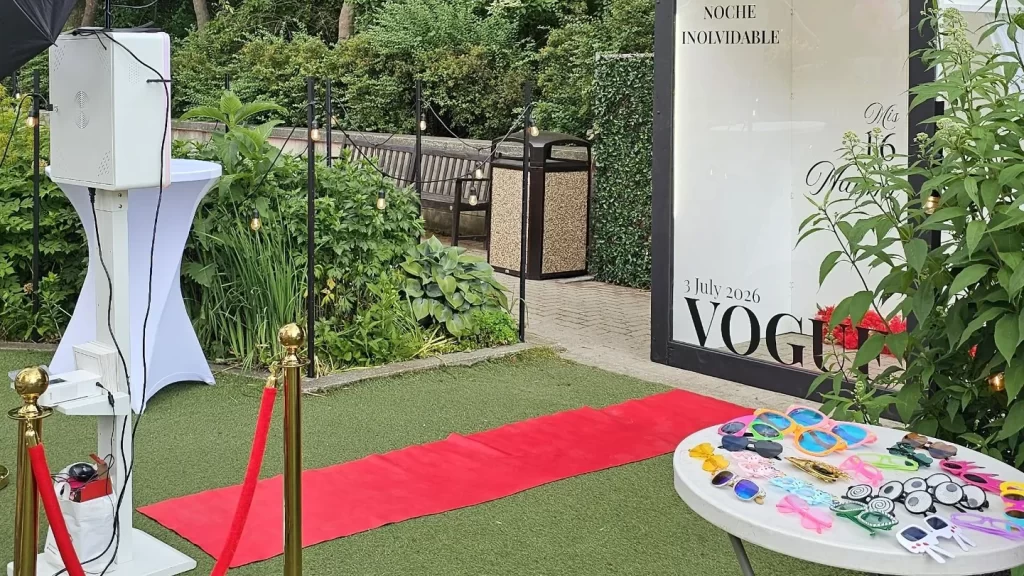
For a Burlington or Milton wedding, choose the booth location and an assessed indoor fallback before the event day. An estate, barn-style room, garden setting or lakeside venue can offer a beautiful atmosphere, but the equipment still needs an appropriate surface, access, power and protection from weather. The wedding photo booth service explains the formats; this guide focuses on planning a setup that remains practical when the original location cannot be used.
An indoor backup is more than a note saying “move into the reception room.” It needs a real position, enough usable space and a route that does not disrupt guests or other suppliers. The backup should be assessed for the chosen equipment, just like the preferred location. Decide who makes the switch and when that decision must happen. That turns a weather concern into an event-planning task instead of an improvised move after guests arrive.
Choose the guest experience before choosing the scenery
Decide whether you want printed photographs, black and white portraits, moving clips or recorded messages. A Signature Classic and a 360 Video Booth create different outputs and have different practical arrangements. Select the format because it suits the guests and the memory you want, then assess where it can operate. Do not choose a scenic corner first and assume any equipment will work there.
The wedding photographer may already be using the grounds or architectural features for formal portraits. A booth can provide a distinct activity for guests without trying to duplicate that work. If the couple wants the room’s character visible in the photographs, discuss framing and background with the supplier. A controlled backdrop can also be the better choice when a scenic view creates unpredictable light or distracting details behind every group.
Inspect the route from unloading to the final position
Ask where equipment can be unloaded and follow the full route to the booth area. Note gravel, steps, thresholds, slopes, narrow doors and any surface that changes in wet weather. These are possible site conditions, not assumptions about all rural or estate venues. Send photographs and ask the supplier to assess the chosen equipment. A route that is comfortable for a guest in ordinary shoes may not be suitable for moving equipment cases.
Confirm whether vehicles can remain near the entrance during unloading and where the team parks afterwards. If another supplier needs the same space, coordinate the sequence through the venue. Include the departure route as well as arrival. A gate, exterior door or service route available during the afternoon may be managed differently late at night. The GTA travel and setup guide explains why these details belong in the booking brief.
Assess the operating surface and surrounding area
The supplier should review the surface for the selected configuration. A visually level lawn, deck or paved area is not automatically an approved equipment location. Consider the booth itself, the backdrop support, the guest approach and the space around any moving camera. Do not treat a carpet or decorative rug as a universal solution for an unsuitable surface.
Look beyond the equipment square. Guests need somewhere to wait and collect their output without stepping into service routes or uneven edges. If the setting includes a terrace or garden path, check how guests will reach the booth after dark. The venue and supplier should confirm the practical arrangement. An attractive photograph of the empty space does not show how it works when the wedding is fully set up.
Discuss weather protection as a complete plan
Rain is only one concern for an outdoor setup. Wind, heat, cold, direct sunlight and changing conditions can affect equipment, backdrops and guest comfort. Describe the proposed cover and location to the supplier rather than assuming any tent, gazebo or patio roof is sufficient. Ask what conditions the configuration can accommodate and what would trigger a move or change.
Do not ask a supplier to make a last-minute exception because the outdoor background is important to the design. A better approach is to create an indoor setting that still carries the wedding palette and message. That preserves the purpose of the booth even when the view changes. Keep the supplier’s requirements and the venue’s rules in the same brief so the decision is based on an agreed plan.
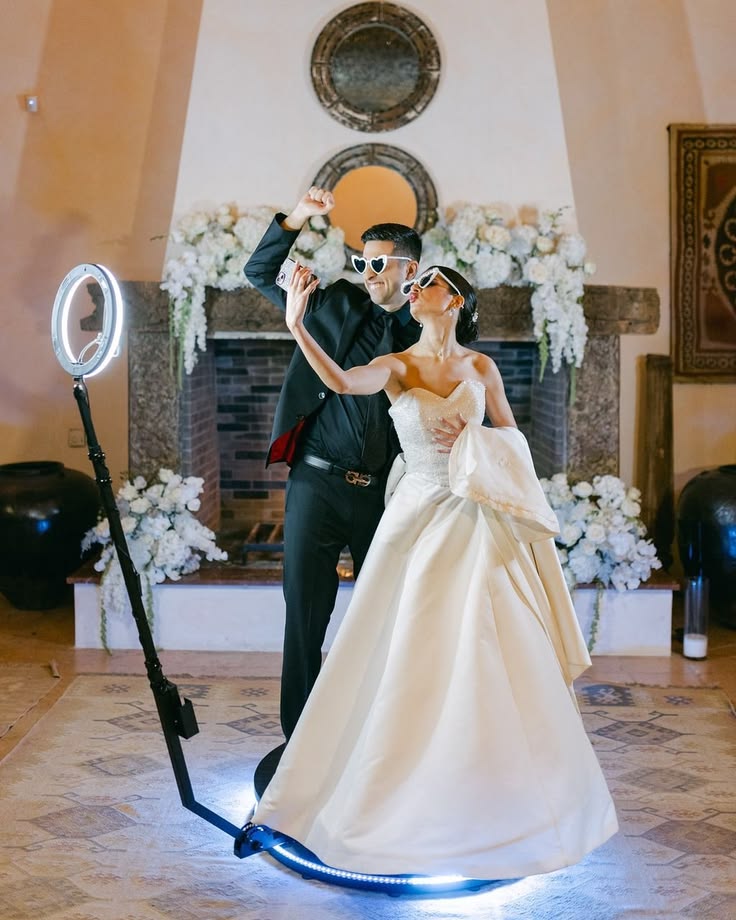
Give the fallback a proper floor-plan position
On the indoor plan, mark tables, dance floor, stage, service routes and any installations. Identify the exact alternative position and have the venue and booth supplier review it. Do not reserve a corner that will contain extra chairs, ceremony items or a dessert table by the time the weather decision is made. A fallback must remain available, not merely exist on an early drawing.
Check the route between the two positions if relocation is being considered. Moving the equipment may require a pause, access to a clear path and another setup check. Sometimes it is better to choose the indoor position from the start rather than operate briefly outside and move later. Ask what each option means for guest-facing hours and the quote. A backup that consumes the only useful activity window may not serve the event well.
Set a decision time and one responsible contact
Choose who decides whether the preferred location will be used. That decision should involve the venue and supplier’s requirements, not simply the host’s hope for favourable weather. Agree when the decision must be made so equipment can be positioned and tested before guests approach. If conditions change later, the supplier needs a reachable coordinator who understands the fallback.
Avoid having several family members give different instructions. One person may want to preserve the outdoor design while another is concerned about guests moving between rooms. Consolidate those priorities before the final decision. The couple should not have to mediate the discussion during the ceremony or reception. A named coordinator with the approved plan can resolve it with the relevant teams.
Coordinate the indoor lighting before it becomes urgent
The indoor fallback should be reviewed for light as carefully as the preferred setup. Windows, decorative fixtures, uplighting and moving effects can change the photograph. Ask how the room will look during the booth’s actual hours. A location assessed in bright afternoon light may behave differently after the reception lighting changes.
Share both possible booth positions with the decorator and DJ. They can consider how their equipment and styling interact with each. Do not prescribe a universal backdrop colour for barn-style or estate rooms; use the couple’s palette and the actual environment. The Hamilton lighting and access guide provides another useful perspective on textured rooms, windows and supplier handovers.
Build the hours around the wedding programme
A scenic venue may encourage guests to spend time outside, while dinner and dancing happen indoors. Map where people will be during the possible booth windows. A station placed outside after everyone moves into the reception may need a clear invitation or may be better located indoors. The choice should follow guest movement, not simply the photograph the organizer liked during the venue tour.
For an illustrative evening wedding, guests might mingle outdoors before dinner and move into the main room for speeches and dancing. Covering both stages could require an approved split plan, a longer booking or one carefully chosen location that remains convenient. These are options to discuss, not standard package assumptions. The Oakville timing guide explores the transition from daylight to the evening programme in more detail.
Keep the guest route comfortable in either plan
A fallback should still allow people to approach, participate and leave comfortably. Check routes for guests using mobility aids or those who prefer a seated photograph, subject to the chosen equipment. Do not assume that an outdoor platform or a narrow indoor corner is suitable for everyone. The supplier and venue should review the practical arrangement while changes are still possible.
Think about coats, wet footwear and bags if guests are moving between outside and inside. Those items need somewhere to go that does not become the booth queue. If the weather changes, the coat area can become busy at the same moment the photo station opens. Separating those activities can help the room remain usable without adding elaborate signs or asking guests to follow a complicated route.
Design a keepsake that works in both locations
The print or overlay can carry the wedding’s visual identity even if the physical background changes. Prioritize the names, date and a restrained design theme. Avoid making the artwork depend on a particular scenic element appearing in every image. If a floral surround or other decoration is planned, confirm whether it can be used in either assessed position and who handles any change.
Approve the proof at its actual output size. A long message that looks readable on a screen can crowd a strip or overlay. The print-template planning checklist helps keep the design useful. Name one final approver and clearly label the accepted version. Last-minute location changes should not also create uncertainty about which artwork belongs to the wedding.
Compare the quote using the real venue details
Published starting rates are a reference, but the exact address, access, hours and selected extras belong in the written quote. Provide the venue in Burlington, Milton or the surrounding area accurately, including the room or outdoor area. Do not describe one service page as covering a different municipality merely because it is nearby. The supplier can assess the actual location directly.
Ask how the preferred and fallback arrangements are reflected in the booking. A separate location, relocation or extra operating window may change the scope and should be discussed. Use the central booth pricing guide for format comparisons, then assess your own total. Do not assume the base equipment rate includes every possible delivery, movement or decorative arrangement.
Check whether the same keepsake station fits both plans
The camera position may have an indoor alternative while the guest book table does not. Review collection, writing space and any favour station in both layouts. Guests still need somewhere to pause after their photograph. If the fallback reduces usable space, agree which optional elements can be simplified without changing the core experience. Do not leave a book balanced on a crowded catering table simply because its original outdoor position is unavailable.
The design can remain consistent even when the layout changes. Keep the approved wording and collection instructions together, and tell the helper responsible for the book where it will be in either plan. That small detail makes the fallback feel considered. The couple receives an organized keepsake, and guests understand what to do without needing an explanation of the weather decision behind the change.
Make the final handover as clear as the setup
Confirm the last guest-facing session, the packing window and the route out of the venue. If a keepsake book or favour station is included, name the person who receives the physical items. Agree how the host receives digital files and how guests will be directed to their photographs. Those details should remain the same whichever approved location is used, unless the supplier has explained a specific difference.
Before the wedding, circulate one final brief containing the date, exact address, access route, preferred position, fallback position, decision time, operating hours, design proof and contact names. Then request or confirm the written wedding quote against that plan. An assessed backup does not diminish the setting you chose. It gives the photo booth a workable place in the celebration when conditions require a different arrangement.