
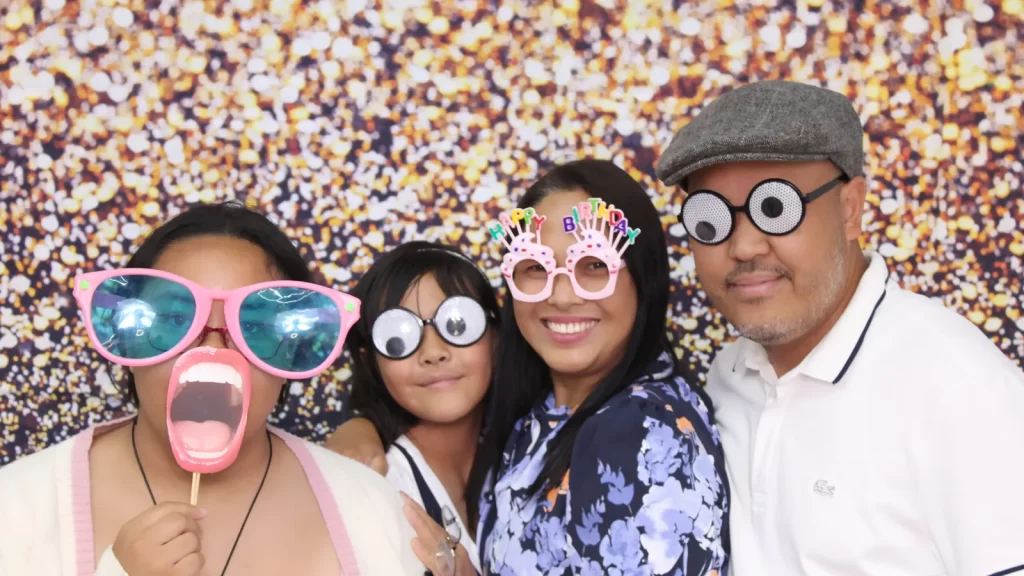
A good office holiday photo booth gives colleagues an easy reason to gather without turning the evening into another work assignment. Choose a photo or video format that fits the group, leave room for spontaneous team pictures, and agree on how images may be shared before the party. The most useful plan starts with the guest experience, then works backwards to the hours, room position and artwork.
For a Toronto workplace celebration, the corporate photo booth service is the place to compare branded options. This guide concentrates on the year-end party itself: colleagues arriving from different locations, dinner and recognition speeches, mixed interests, office-building access and a keepsake that feels like a celebration rather than an advertisement.
Decide what the party should feel like
An employee celebration, a client reception and a family holiday afternoon need different photo corners. At an employee party, the company name can sit quietly below the photos. At a reception with clients, a clear event identity may be more useful. At a family afternoon, guests should be able to enjoy the booth without understanding an internal company joke. Write down who is attending before choosing a backdrop or a prop collection.
Give the planning team one sentence to work from, such as “warm portraits of colleagues celebrating the year together.” That sentence helps settle competing requests. A giant logo, a complicated theme and a stack of novelty props may each seem attractive separately, but together they can bury the people in the photograph. Keep the faces and the shared occasion as the main subject.
Choose a format with a clear purpose
A print booth suits colleagues who want something to take home or place on a desk. A Glam Booth creates a different mood through black and white studio-style portraits. A video experience suits people who want to move, gesture and perform together. These formats are complementary, but they are not interchangeable: a 360 video clip is not a printed group photograph.
Consider the less enthusiastic guest as well as the team members who love a camera. A simple still photograph can be easier to join than a performance with music. If the budget supports two experiences, give each a distinct role rather than placing two similar queues side by side. One can produce relaxed team keepsakes while the other creates short celebratory clips. Confirm the actual output, staffing and sharing choices for the selected equipment.
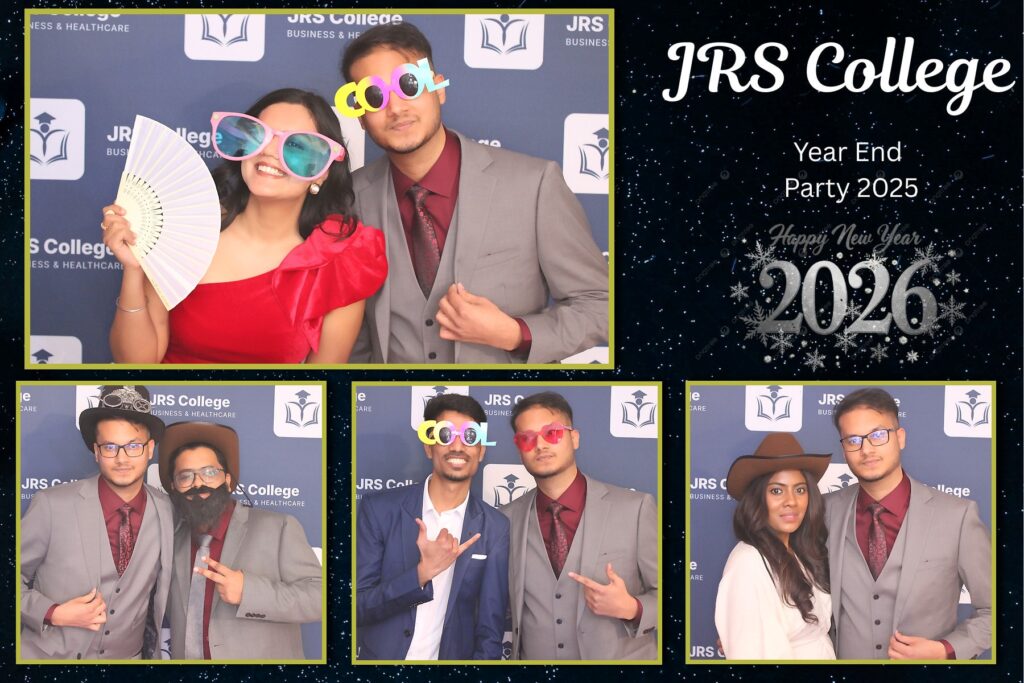
Use seasonal styling without prescribing a celebration
Ask the organiser what the event is called and how employees describe it. A company may want an explicitly Christmas-themed party, a winter social or a year-end celebration. Do not assume that one theme represents every attendee. A winter palette, metallic accents or the company’s colours can work when the brief calls for broadly seasonal styling, while a more specific celebration should follow the agreed brief.
Keep the backdrop behind the guests visually calm. Fine lettering, dense patterns and several competing signs can make a photograph difficult to read. If the room already has strong decor, the booth can borrow one colour or material rather than replicate the whole room. Check how the backdrop looks with dark jackets, light shirts, patterned outfits and glasses. A sample photograph is more useful than judging the empty backdrop alone.
Make the company branding feel proportionate
Put the event name, company name and year where they remain readable without shrinking the pictures. Use a high-quality logo supplied by the person responsible for the brand, and request the correct version for a light or dark background. A logo copied from a small email signature may appear soft when printed. The proof should show the actual print arrangement, including the image windows and any reserved border.
Decide who can approve the design before circulating it. A single organiser should consolidate feedback from marketing, human resources and the event committee. Otherwise a last-minute request can undo an earlier approval or leave the attendant working with several versions. The props, backdrops and print-template checklist explains the wider design decisions; the holiday-specific priority is a readable keepsake with a clear event identity.
Fit the booth around recognition and dinner
Start with the programme, not an arbitrary number of hours. Mark arrivals, the meal, speeches, awards, entertainment and the final departure. The booth needs a window when people are free to leave their seats. If recognition speeches are central to the evening, avoid encouraging a lively queue beside the stage while names are being announced. Agree whether the booth pauses and how that affects the quoted operating period.
As a planning example, a reception followed by a seated meal may benefit from a short arrival window and a longer session after the formal programme. A standing party may work better with continuous operation. Neither example establishes a standard rental duration. Ask for a schedule that distinguishes delivery, setup, active guest sessions, any idle period and collection. That makes different quotes easier to compare and avoids paying for time nobody can use.
Help teams meet without forcing participation
Provide a few optional prompts that work across departments: a project team, colleagues who joined in the same year, or a group celebrating a completed milestone. Keep prompts broad enough for new employees and guests to understand. The host can mention the booth once during a natural transition and let the attendant welcome people as they pass. Repeated announcements can make an optional activity feel compulsory.
Avoid compulsory department photographs on a tight rota unless the event genuinely needs them and people have agreed to participate. A social photo booth should not become a staff attendance check. Leave time for spontaneous combinations and allow guests to choose a simple portrait without props. Colleagues who do not want a photograph should still feel part of the evening, with no public explanation required.
Build a queue that does not block the party
Place the booth where it can be noticed from a social area without borrowing space from a doorway, bar queue or coat check. A booth hidden in a distant room may be overlooked; a booth directly across the main passage can interrupt service. Ask the venue to review the equipment footprint together with the waiting area and the route guests use after taking their pictures.
The space behind the camera is only part of the calculation. People also need somewhere to choose props, gather their group, collect a print and retrieve belongings. An open route benefits guests using mobility aids and colleagues carrying drinks or bags. Confirm what accessible participation the chosen equipment supports. Do not assume that a platform-based video experience offers the same access as a still-photo setup on the floor.
Agree on sharing before the screen is built
Separate three decisions: how a guest receives their own image, who can see the event collection, and whether the company may reuse an image. An employee accepting a print is not the same as volunteering for a public social-media post. Give the organiser responsibility for the event’s photo-sharing approach, and communicate it in straightforward language before guests interact with the booth.
Ask what sharing methods the actual setup supports and what information, if any, a guest must enter. Provide an alternative for someone who does not want to use a phone or supply contact details where the selected service permits it. Avoid adding marketing sign-ups to a staff party by default. If the company wants approved photographs for its own channels, arrange that selection separately instead of treating the complete guest collection as ready for publication.
Keep props friendly and optional
A small, coherent prop collection is easier to use than a crowded table. Choose pieces that can be picked up quickly and understood in a group picture. A winter hat, a simple celebratory sign or a company-approved visual reference can support the theme. Avoid props that rely on jokes about an employee’s age, appearance, relationship status, drinking or job security. What feels funny to one organiser may land differently across the workplace.
Give guests permission to take a straightforward photograph. Some people want a polished picture with a colleague; others want a playful pose. Both belong at the same party. Ask how props are kept orderly through the evening and who removes damaged pieces. Keep drinks and food away from the prop surface so the attendant can manage the experience without repeatedly clearing the table.
Handle office access as its own workstream
For a party inside an office building, confirm the delivery entrance, security contact, lift arrangements and access time with building management. The person booking the party room may not control the loading area. A passenger lift suitable for guests may have different rules for equipment, so pass the provider’s access requirements to the building rather than guessing from a photograph.
Make the load-out plan just as clear. Security staff, lift availability and door access can change after the usual office day. Give the organiser and provider an on-site contact who will remain until collection is complete. The North York corporate event guide explores office and hotel planning in more detail, while the downtown Toronto logistics guide covers tighter building access arrangements.
Plan for hybrid teams and guests who leave early
If colleagues are travelling from several offices, do not reserve every photograph for the final part of the evening. An earlier opportunity can include guests who need to leave before dancing. Ask the organiser whether team leaders, visiting colleagues or families have fixed arrival and departure times. Use those details to choose an operating window, without promising that every person will participate.
For remote colleagues who cannot attend, decide whether there is a separate, voluntary way to contribute to the celebration. Do not promise that a hired booth includes remote capture or virtual attendance unless that service has been confirmed. A display of approved team messages may be enough. Keep any remote activity distinct from the on-site queue so the attendant is not unexpectedly responsible for coordinating a second event.
Compare the whole event scope
When comparing quotes, look beyond the booth name. Identify the guest operating hours, artwork, backdrop, attendant arrangement, output, sharing method, delivery details and any additional equipment. If the venue needs early setup followed by an idle period, make that visible in the request. If photographs are required before dinner and after speeches, describe both windows so the proposal reflects the programme.
For current published rates and the factors that affect a total, use the Toronto photo booth cost guide. A holiday theme alone does not tell you the scope of a booking. Ask for a written breakdown tied to the date and venue, and keep the approved artwork and final event schedule alongside it. The aim is a shared understanding of what will happen, not simply a familiar package label.
Send a brief the organiser can actually use
Before requesting a quote, assemble the date, venue address, approximate guest count, event name, programme and preferred output. Add the room plan, access contact, branding approver and sharing preferences when available. Identify any guests who need a particular participation arrangement without circulating unnecessary personal information. Note which details are still being settled so they can be confirmed before production.
Just Great Events can use those event details to discuss a suitable booth and its supporting setup. Request a written quote with the holiday-party schedule and the kind of keepsake you want colleagues to take away. A well-planned booth should fit the celebration’s rhythm, make room for different personalities and leave the organiser free to enjoy the evening with the team.