
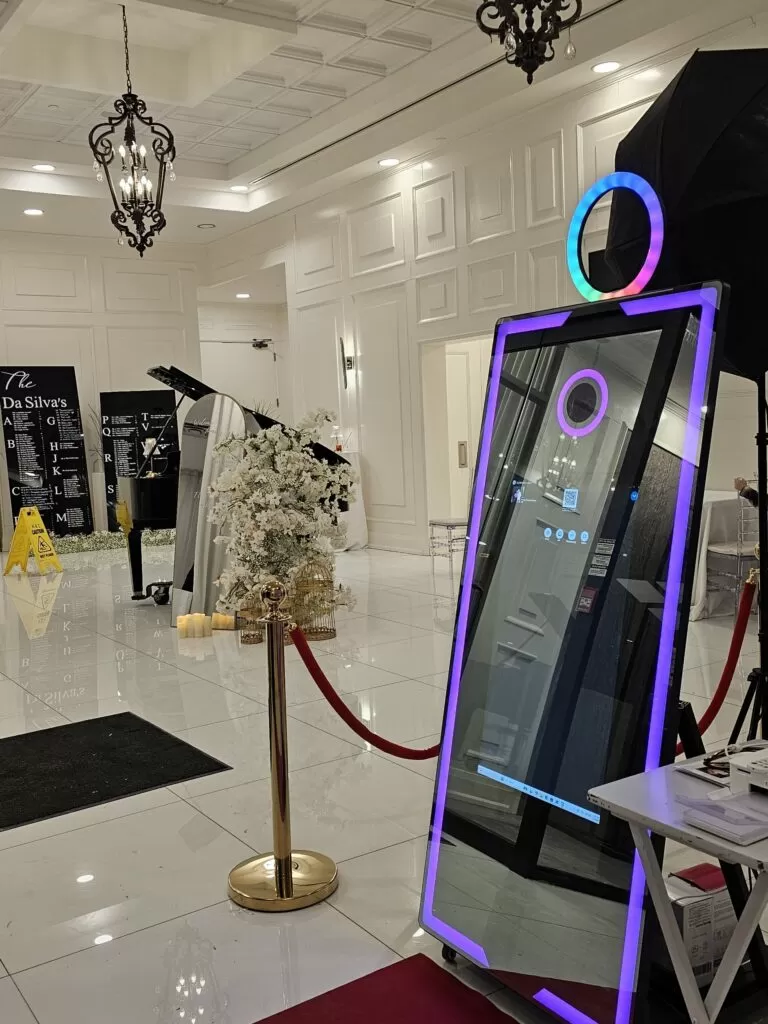
A winter wedding photo booth works best as a comfortable indoor portrait space that fits the reception programme. Give guests somewhere to settle after arriving, keep the activity away from draughty entrances and coat queues, and choose lighting and a backdrop that suit the evening. The result can feel seasonal without relying on snow, outdoor access, or a collection of holiday props.
For a Toronto or GTA reception, Just Great Events offers wedding photo booth options with different portrait and video styles. This guide focuses on the decisions specific to a cooler-season wedding: indoor placement, arrivals, winter clothing, the transition into evening, and keepsakes guests can carry home.
Plan the guest’s arrival before the first photograph
Guests arriving in coats and outdoor shoes may need time to check belongings and find their place in the room. A booth immediately inside the entrance can compete with that process. Choose a position where people can join once they are ready, without blocking the coat check or the route to the reception.
Ask the venue how arrival works if many guests reach the building at once. A wedding shuttle, a ceremony ending nearby, or a shared start time can create a concentrated arrival period. The booth should not turn that welcome into another line everyone feels required to join.
Give the activity a clear introduction after guests have settled. A brief announcement or visible sign can explain where it is and what guests receive. There is no need to require every person to pose on entry. An optional station gives people time to warm up, greet family, and choose who they want beside them.
Choose an indoor position that stays comfortable
Keep the booth away from a frequently opened exterior door where possible. A corner that appears ideal on an empty-room tour may become a traffic route when guests arrive or suppliers remove equipment. Ask the venue to review the proposed position with the actual floor plan.
Leave room for waiting guests, a clear exit from the activity, and any print collection or guest-book table. Avoid using the space beside a heater, service door, or emergency exit simply because it is free of dining tables. The provider should confirm the operating footprint of the selected configuration.
Think about seated participation and guests using mobility aids. Discuss how the camera can frame people comfortably and how they approach the station. Winter footwear and bulky belongings can make crowded routes more awkward, so a clear, uncluttered path is part of the guest experience.
Build a seasonal palette without making it a holiday party
A winter wedding can use ivory, deep green, warm metallics, muted blue, or other colours from the couple’s own design. It does not have to include Christmas wording, snowflakes, or seasonal characters. Start with the wedding invitation and room decor, then choose one or two elements that will translate well into a portrait.
For a formal look, a simpler backdrop can give detailed clothing and flowers room to stand out. For a more playful reception, optional props can reflect the couple’s interests. Keep props separate from the essential portrait so guests who prefer a straightforward photograph have that choice.
Look at the design as a keepsake that will be seen years later. Names and the wedding date often matter more than a long seasonal slogan. The photograph should remain the main element, with enough space for faces and a readable border.
Choose the output before choosing a booth style
The Signature Classic Photo Booth is an option when the couple wants printed photographs. The Glam Booth offers black and white studio-style portraits. A Mirror Photo Booth adds an interactive mirror presentation. These choices can all support an indoor wedding brief, subject to the room and access assessment.
A 360 Video Booth provides moving clips instead of a conventional print portrait. Choose it because that is the experience the couple and guests want. Its protected camera movement area needs to stay separate from the dance floor and circulation routes.
Comparing formats is easier when the question is specific: do you want a print for the guest book, a black and white portrait, or a video moment? The wedding booth comparison guide explores those differences without assuming one option suits every celebration.
Test the evening scene rather than the daytime room
The reception’s lighting may be very different from the conditions during a venue visit. Ask what the room will look like during dinner and dancing. Decorative uplighting, screens, candles, and DJ effects can all influence the booth’s background and faces, even when the station has its own lighting.
Share the booth position with the lighting team and arrange a test under the intended conditions where practical. Keep strong coloured effects from falling directly onto the portrait area when the provider advises it. The aim is not to brighten the whole room, but to create a consistent scene for photographs.
If a window is part of the planned background, consider how it will look after dark. Reflections may become more noticeable than the outside view. A neutral backdrop or another camera direction may give a more predictable result. Let the operator assess the scene rather than assuming a daytime photograph of the room tells the full story.
Fit the booth into the reception’s free periods
List the moments when guests are expected to sit, watch, or move: entrances, dinner, speeches, performances, cake, and dancing. Then choose operating hours that leave meaningful opportunities for photos. A long booking is not automatically useful if most of it overlaps a formal programme.
An early window may suit guests who will leave before late dancing, while a later window can capture relaxed groups. Some couples prefer one continuous period; others need a planned pause. Discuss the options and how they are reflected in the booking. Avoid assuming that any pause automatically extends the closing time.
Designate the planner or MC to update the attendant when the schedule shifts. A clear cue is more helpful than several guests saying that the speeches will finish soon. If the couple wants additional time, the authorized contact can discuss availability and any change to the written arrangement.
Make priority family portraits easy to gather
A winter wedding may bring together relatives who see each other rarely. If particular combinations matter, write a short list and give it to someone who knows the guests. Arrange an opportunity when the couple and those relatives are available, rather than trying to assemble everyone during a busy dance set.
Keep the list separate from the general booth experience. The station should still be welcoming to friends and informal groups. A handful of planned portraits can preserve important memories without turning the whole evening into a formal photography schedule.
Allow guests to decline props, choose a comfortable position, or take a break. The host can offer an earlier photo to someone leaving soon. These small choices make participation more considerate than expecting every guest to use the booth in exactly the same way.
Keep coats, drinks, and bags out of the camera area
Provide a nearby place for temporary belongings that does not become a new obstruction. Guests should not have to place bags against a light stand or leave drinks on the printer table. Coordinate this with the venue so the booth’s surrounding area remains usable.
Check that any floor near the entrance is managed by the venue before people begin queuing. The booth provider should handle its own equipment and cable arrangement, while the venue manages its premises. Do not let guests reposition equipment to make room for coats or a chair.
If the reception room is compact, reduce the number of decorative pieces around the station. A clear approach, a well-framed background, and a tidy collection point can feel more polished than a large scene that squeezes the waiting area.
Give the guest book a practical place
A photo guest book needs space for people to attach a picture and write a message without blocking the next session. Confirm who supplies the book and materials, how any additional print is handled, and who keeps the table organized. Place it beside the photo activity rather than directly in its exit path.
Ask one trusted person to collect the book and unclaimed keepsakes before leaving. A wedding couple may depart before the room is cleared, and the book should not be left among rented decor. Agree on the handover so the attendant knows whom to contact.
An Audio Guest Book can preserve spoken messages as a separate activity. It needs a quieter location where guests can hear the greeting. Avoid placing it beside a loudspeaker simply because that table is close to the photo booth.
Prepare the print proof for the finished size
Review the artwork with the names, date, and colours in place. A print strip gives less room for text than a large invitation. If a monogram or floral border occupies too much space, simplify it so the portraits remain generous and the wording remains readable.
Ask one person to consolidate feedback. The couple, planner, and family may each have preferences, but the provider needs one approved version. For bilingual wording, have a fluent reader check spelling, name order, and line breaks on the final proof.
The backdrop and template checklist is useful here. Remember that the background photographed behind guests and the border printed around them are separate design decisions. They can share a palette without repeating the same dense pattern.
Keep outdoor portraits separate from the booth plan
If the couple wants photographs outdoors, discuss that with the event photographer and venue as a distinct activity. A fixed booth should not be moved outside simply because a brief outdoor portrait is planned. Equipment conditions, power, surface, and guest comfort require their own assessment.
For any proposed outdoor station, the provider must approve the location and an indoor alternative must remain available. The outdoor planning guide covers the relevant questions. A covered area does not automatically resolve wind, temperature, or other equipment concerns.
An indoor booth can carry the winter theme while remaining a comfortable gathering point throughout the reception. That choice also reduces the need to direct guests between locations while they are enjoying dinner or dancing.
Let the couple enjoy the booth together
Reserve a brief opportunity for the couple to use the station without spending the whole reception managing it. A planner or trusted friend can gather the first group, then let the attendant guide the session. The couple may want one simple portrait before trying props or joining a larger group.
Do not leave that opportunity entirely to chance if it matters to them. Put it beside a natural transition in the reception timetable and keep it flexible enough to respect the programme. Once their photograph is taken, the booth can continue as an activity guests explore at their own pace, while the couple returns to the celebration.
Turn the wedding brief into a clear quote
Send the venue, room, date, guest count, preferred output, and draft reception timetable. Include the access window, any elevator or loading requirements, and the planned booth position. Ask which design, prints or digital delivery, staffing, and extras are included in the selected arrangement.
Before the event, confirm the final design, operating times, programme contact, and keepsake handover. The booth then has a defined role in the wedding: a welcoming place for portraits and shared memories during the hours guests are free to enjoy it. Request a written quote for the winter wedding with those details together.