
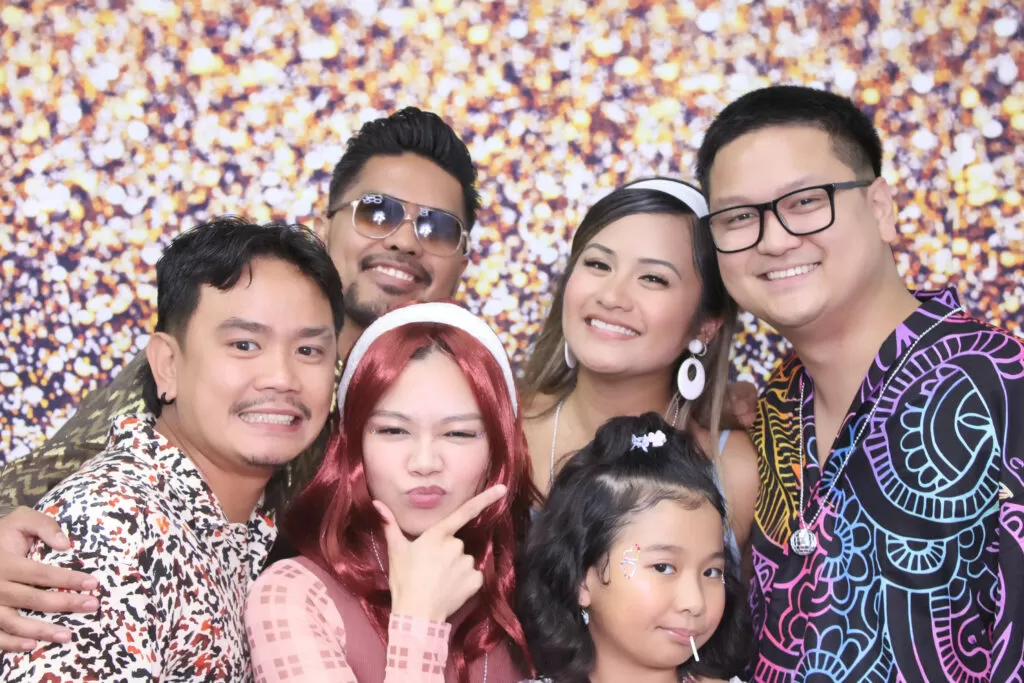
A family reunion photo booth is most useful when it helps relatives take photographs together without spending the gathering organising everyone. Plan a few priority family groups, allow plenty of informal combinations, and decide how prints and digital files will reach people afterwards. A simple design with the family name and reunion date can become a keepsake without overshadowing the faces.
Begin with the available photo booth formats, then describe the ages, group sizes, and venue. A reunion in a Toronto restaurant, a community room, or a private home has different space and access needs. The right choice depends on who will use it and what they want to keep, not on finding the most elaborate piece of equipment.
Start with the family groups that matter
Ask each branch of the family for a short list of photographs they would value. This might include cousins who rarely meet, siblings with a parent, or several generations together. Keep the request open enough that nobody has to explain a complicated relationship or fit into an assumed family structure.
Choose a limited set of planned portraits and leave the rest voluntary. A long schedule of every possible combination can consume the reunion. It can also make people feel overlooked when an organiser reads a list that does not reflect how they describe their own family. Use names and group descriptions supplied by the people involved.
Make one person responsible for quietly gathering each priority group. That organiser should know who is present, who has stepped outside, and who needs a seat. The booth attendant can guide the photograph, but should not have to identify relatives from a handwritten family tree.
Match the booth to the size of the groups
A booth portrait and a whole-family photograph are different tasks. The booth may be ideal for several people at a time while a large reunion group needs a separate arrangement. Ask the supplier about the usable framing and operating space for the exact equipment and backdrop. Do not assume that a large room means every relative can fit into one booth image.
For photographs of the entire gathering, consider whether a photographer and an appropriate location are needed. A staged group picture may require a clear viewing line and enough room for people to be seen. That planning should happen before the day, rather than turning a booth attendant into an improvised large-group photographer.
Within the booth, smaller combinations can tell a richer story. Cousins can take a playful portrait, grandparents can choose a seated photograph, and siblings can recreate a pose if they wish. Offer ideas without expecting anyone to perform a joke or repeat an old picture that carries uncomfortable memories.
Give different generations a choice of keepsake
Printed photographs work well when guests want something to take home immediately. Digital files are useful for relatives who live farther away or want to make their own album. Some families may enjoy a photo keychain, while others would rather keep the image free of an object or accessory.
| Family preference | Useful approach | Question to settle |
|---|---|---|
| A photograph for the fridge | A print booth with a readable template | How are copies handled for each group? |
| A shared family album | Digital files with an agreed organiser | Who receives and distributes the gallery? |
| A small physical favour | A photo keychain option | How many pieces are included? |
| Spoken family messages | An audio guest book alongside the photos | Where can guests record without background noise? |
Confirm the format rather than assuming every booth prints. A 360 video booth makes a clip, and an audio guest book records voices. If the reunion’s main goal is a photograph for an older relative’s album, make that goal explicit before selecting a video-focused attraction.
Keep the design personal and readable
A reunion template needs fewer words than an invitation. The family name, date, and a short message are often enough. If several surnames belong on it, check their spelling and preferred order with the organiser. Do not reduce important names to tiny lettering simply to fit a decorative heading.
Colours can come from the reunion invitation, a meaningful place, or a simple shared preference. Avoid making a heritage symbol stand in for an entire family unless the family has chosen it. A neutral backdrop can be a better solution when relatives have different tastes and will display the photographs in different homes.
For bilingual or multilingual text, ask fluent family members to review the actual design proof. A translation approved in a message can still be laid out incorrectly on a small print. Check the final line breaks, accents, and direction of text where relevant. One final proof should be the version sent for production.
Use old photographs without creating extra work
A small display of family photographs can encourage conversation while people wait. Keep original photographs secure and away from drinks, heat, and busy handling. Copies are usually more practical for a party display, especially when an irreplaceable image belongs to a relative who has travelled with it.
If guests want to recreate an old pose, have the reference ready before their turn. Decide whether the recreation is simply for fun or will be paired with the older image later. Do not assume the booth package includes scanning, restoration, collage design, or editing two images together. Those are separate requests to discuss.
Consider a modest caption card beside the display with names supplied by the family. Where an identification is uncertain, leave it open for relatives to discuss rather than printing a guess. The reunion can be a place to collect family knowledge without turning the booth template into an unverified historical record.
Put comfort ahead of a dramatic backdrop
The approach to the booth should be clear and easy to understand. Check the path from seating to the photo area, including door thresholds, furniture, and the space where guests wait. Ask how the selected setup accommodates a seated portrait and whether any adjustments need to be arranged before arrival.
Keep a chair nearby for relatives who would rather sit until their group is ready. This is different from placing a chair inside an operating area without asking. The attendant needs to confirm what is safe and what works with the camera position. Guests should not have to stand for a long time to keep their place.
Volume and lighting also affect participation. A family member may enjoy a quiet still portrait but avoid a noisy video station. Explain the options in plain language and let guests choose. A friendly invitation works better than insisting that everyone try the same experience.
Arrange the session around arrivals and the meal
Reunions often bring together people with different travel plans. Identify any relatives who can attend only part of the event and take their important portraits early. Avoid saving all family photographs for the end if some guests are likely to leave after lunch or before evening activities.
An illustrative programme might begin with casual photos during arrivals, pause during a welcome and meal, then reserve a short period for priority groups. Afterwards, the booth can return to open participation. This arrangement gives the organiser a structure without turning every minute into a timetable.
If guests arrive in waves, use a small sign or one announcement to explain the booth hours. Do not make relatives guess whether it is open while the attendant prepares equipment. Include any planned pause in the supplier’s brief so the room programme and the rental schedule describe the same event.
Plan private sharing before taking the first photo
Decide who will receive the full gallery and how the family will distribute it. A family organiser may prefer to send a private link to attendees rather than post it publicly. Ask the supplier about the actual gallery and download arrangements, and communicate the agreed approach clearly.
Guests should be able to enjoy a portrait without being asked to publish it on social media. Tell relatives before the event if photographs may appear in a reunion newsletter or public family page, and give them a practical way to decline that use. With children, follow the family’s and organiser’s agreed participation choices.
Avoid displaying personal contact details in the photo template. If relatives want to reconnect, collect those details separately through a method the family has agreed to use. A photograph can circulate beyond the original group, so it is a poor place for phone numbers, home addresses, or private travel plans.
Make an indoor or outdoor decision early
For a home or garden reunion, confirm the surface, protection from weather, power arrangement, and an indoor alternative with the supplier. A patch of lawn that looks spacious in a photograph may not provide the right operating conditions. The equipment, backdrop, and waiting guests all need to be considered.
For a restaurant or rented room, ask where the booth can go without blocking service or the route to washrooms. Confirm when the supplier may unload and how the equipment reaches the room. A family member who knows the building should be available at the agreed arrival time.
The guide to rental inclusions and space helps organise these questions. If the event crosses several locations, the GTA travel and setup guide explains what to put on the brief. For styling, use the print, prop, and backdrop checklist.
Give one organiser responsibility for the finish
At the end of the reunion, someone should collect loose prints, return borrowed family photographs, and check the delivery arrangements for digital files. Assign this responsibility before the event. The person hosting the meal or driving relatives home may not be the right person to manage the keepsakes as well.
Keep a short record of the chosen design and any important group names with the finished album materials. If the family plans another reunion, that record can help establish a consistent visual thread without repeating the same celebration exactly. A future organiser will appreciate knowing what the previous event actually used.
To plan the booth, send the date, Toronto or GTA venue, expected attendance, preferred output, and the important group-photo requirements through the quote request form. Include any access or seated-portrait needs at the beginning. The aim is a family collection that feels welcoming while everyone is together and remains useful after the reunion ends.