
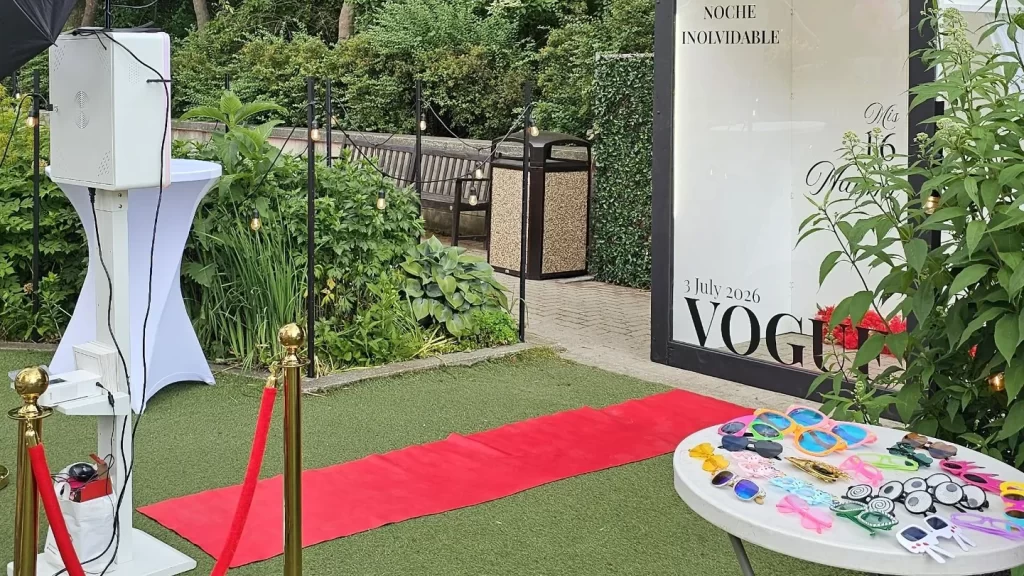
An outdoor photo booth needs a location the provider approves for the equipment, a dependable power arrangement, a stable surface, and a reserved indoor alternative. A tent or covered patio is only part of the assessment. Rain, wind, temperature, changing light, and the route guests use all influence whether the station can operate as intended.
For a Toronto wedding or party, start with the desired experience and ask the supplier to assess the proposed setting before booking a particular format. Just Great Events offers photo booth rental options for different occasions. This guide explains what to resolve when some or all of the celebration is outdoors, without assuming every outdoor space is suitable.
Decide whether the booth itself needs to be outside
An outdoor celebration does not require every activity to occupy the lawn or terrace. A nearby indoor room can provide a controlled photo setting while guests enjoy the garden, patio, or courtyard. The design can still carry the event’s colours and mood. Decide whether the outdoor setting is essential to the portrait or simply part of the wider party.
If the view is the main reason to place the booth outside, discuss how it will appear at the actual operating time. The camera’s framing may not include as much scenery as a phone photograph taken from farther away. Guest faces, background brightness, and the direction of light still need to work together.
Consider a hybrid plan: event photography captures the setting, while a booth indoors provides consistent keepsakes. A roaming photographer or event photography service serves a different purpose from a fixed booth. The choice should follow the photographs you want, not a rule that one format must do everything.
Assess shelter as an equipment requirement
Show the provider photographs of the proposed shelter from several angles. Include its open sides, roof, nearby drainage, and the path from the delivery point. A roof can reduce direct exposure without protecting against wind-driven rain or a low sun angle. The supplier needs enough information to make a practical assessment.
Ask the venue or tent supplier who is responsible for the structure and what conditions it is designed to handle. The booth company should decide whether its equipment can operate there. Do not treat a decorative canopy, umbrella, or small gazebo as equivalent to an approved event shelter.
Leave the shelter’s safety and installation decisions with the responsible professionals. Hosts and guests should not improvise weights, attachments, or extra coverings around operating equipment. A change intended to keep a backdrop dry can create a different problem if it interferes with a structure, a cable route, or guest access.
Check the floor under the whole activity
The equipment position should be stable and suitable for the chosen format. Grass, gravel, soft ground, uneven paving, and a sloping terrace create different questions from an indoor level floor. Discuss the surface with the provider, including what might change if the ground becomes wet.
The waiting area and approach matter too. Guests in formal shoes, children, and people using mobility aids need a practical route to the station. A level platform for the camera is not enough if everyone must cross an unsuitable path to reach it. Ask the venue to assess circulation as part of the event layout.
A 360 Video Booth requires a protected camera movement area. That zone cannot become a walkway when the surrounding space gets busy. If the site cannot provide the required operating area, choose another format or another position rather than reducing the clearance on the day.
Make power a confirmed part of the site plan
Identify the approved power source and ask the provider what the actual equipment needs. Do not assume the nearest outdoor outlet is suitable, available, or reserved for the booth. Catering, decorative lighting, heaters, and other entertainment may already be included in the venue’s power plan.
Have the venue and relevant suppliers coordinate any temporary power arrangement. The host should not improvise electrical connections or run household extension cords through a guest route. Cable protection, weather suitability, and circuit use need to be handled by the people responsible for the installation.
Mark the power route on the floor plan along with the booth and queue. A visually attractive spot across a lawn may be impractical if the connection cannot be made appropriately. Resolve that before building the backdrop, because moving the equipment later may also require moving guests, decor, and lighting.
Test the light at the right time of day
Visit the location near the planned booth hours if practical, or send photographs taken at a similar time. The direction and intensity of sunlight can change the scene. Bright backlighting may make the view appealing to the eye while creating a difficult portrait situation. The booth’s lighting does not remove every environmental constraint.
Ask whether the camera should face a neutral backdrop, a shaded direction, or an indoor opening. Avoid choosing the position solely because the background looks attractive at midday when the booking begins in the evening. For a celebration that crosses sunset, discuss how lighting will be assessed as conditions change.
Decorative lights should support the setting without becoming the main light on faces. Keep bright coloured effects and reflective objects out of the camera’s critical area when the provider advises it. A simple, predictable scene generally gives guests a clearer portrait than several competing sources of light.
Reserve an indoor alternative that remains available
An indoor backup is a real room position, not a statement that equipment can go “somewhere inside”. Confirm the space, access route, power, footprint, and guest circulation for the alternative. Make sure it is included in the venue arrangement and will not be occupied by dining tables or another supplier.
Choose a backup that can be communicated easily. Guests should be able to find the booth without walking through a service area or leaving the event entirely. If signs or an announcement are needed, prepare them as part of the plan. The host contact should know which location is active.
Think about the decor in both positions. A large outdoor installation may not fit the indoor room. Choose a backdrop that can work in the approved alternative, or accept a simpler indoor design. A reliable secondary arrangement is more valuable than trying to reproduce every outdoor detail after plans change.
Agree who makes the location decision and when
The provider should decide whether conditions are suitable for its equipment, with the venue responsible for its own space and event requirements. The host needs to know how that decision is communicated. Establish a decision point early enough for setup to happen in the chosen position.
A weather forecast is useful information, but it does not replace an assessment of the actual site and equipment conditions. Avoid promising guests that an outdoor station will operate regardless of the day. Equally, do not wait for guests to arrive before acknowledging that the planned shelter or power arrangement is missing.
If conditions change during the event, follow the provider’s and venue’s instructions. A move may require service to stop while equipment is secured and tested again. Discuss how interruptions are handled in the booking rather than assuming sessions can continue through a relocation.
Choose a format for the guest experience
A Signature Classic Photo Booth is suited to a brief focused on printed portraits. A Digital Photo Booth provides a print-free experience. The setting still needs approval whichever format is chosen; removing a printer does not make every other component weatherproof.
For a garden wedding, guests may want a photograph in small family groups. At a company picnic, people may participate between activities. At a neighbourhood celebration, arrivals may be spread over a longer period. Choose the hours and level of interaction around those patterns rather than assuming an outdoor crowd behaves like a seated reception.
Explain the output clearly. Guests should know whether they receive a print, a still image, or a video clip. Confirm how digital delivery will work at the location, including any connectivity considerations, without making a promise the provider has not verified.
Keep props and keepsakes manageable
Outdoor conditions affect small items as well as equipment. Loose paper signs, lightweight decorations, and uncollected prints can be displaced or damaged. Select a modest prop set that the attendant can manage and keep collection within the approved sheltered area.
Provide a sensible place for guests to set down drinks and bags before posing. Avoid placing refreshments on the equipment table. If a guest book is part of the event, locate it where pages and writing materials can be used comfortably, with the book collected by the host when the station closes.
The props and print-design checklist can help simplify the scene. An outdoor setting already supplies visual interest. The booth does not need extra fragile pieces merely to make the plan feel complete.
Use an example to test the backup plan
Imagine a wedding reception with cocktails on a terrace and dinner inside. The couple wants the booth near the terrace, but the provider identifies a suitable indoor position beside the reception room. The plan reserves that position, uses a backdrop that fits it, and gives guests an easy route between the two areas. This is a hypothetical planning example, not a statement about a particular venue.
If conditions support the approved outdoor setup, the provider can follow that plan. If not, the indoor station still feels like part of the celebration. The host does not have to negotiate a new room or move dinner furniture while guests arrive. The chosen operating hours remain tied to the programme.
Test your own plan the same way: if the outdoor position became unavailable before setup, could the provider immediately identify the approved alternative and contact? If the answer depends on finding an empty corner later, the backup is not yet complete.
Plan guest communication for either location
Prepare the directions to the booth so they remain useful if the indoor alternative is selected. A sign that simply points toward the garden may become misleading. The host or MC should know the final location before inviting guests to participate, and any event map should reflect the active arrangement.
Keep the explanation calm and practical. Guests need to know where to go and what the activity offers; they do not need the equipment discussion behind the location decision. If the indoor station is a short walk from the main gathering area, make the route clear and suitable for the people attending. Confirm that the alternative is open for the full operating period, rather than a room that closes when dinner begins. This keeps the backup useful as a guest experience, not merely as a place to store the booth.
Send a site brief with the enquiry
Include the date, address, occasion, guest count, preferred output, planned operating time, photographs of the outdoor position, surface information, shelter details, and the indoor alternative. Add the venue contact and any supplier access requirements. Let the provider identify missing details before a final commitment is made.
The GTA travel and setup guide explains how arrival and guest hours fit together. For cooler-season receptions, the winter wedding planning guide focuses on comfortable indoor portraits and timing. Request a written quote based on the approved site plan, with the outdoor and backup arrangements clearly understood.