
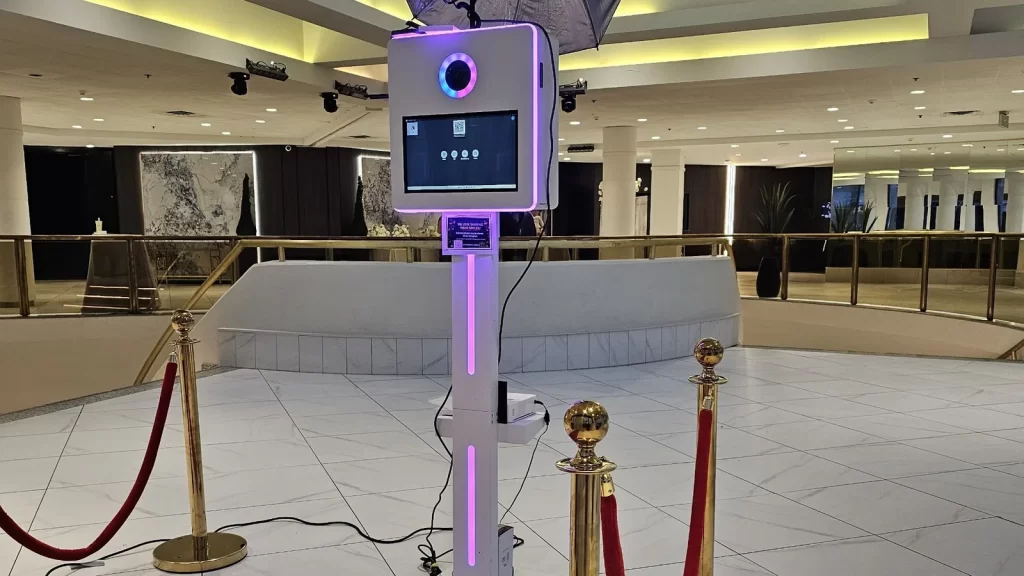
A photo booth booking across the Greater Toronto Area needs three separate schedules: travel and access, equipment setup, and guest operating hours. If an event uses more than one address, each location also needs its own contact, room plan, and confirmed handover. A single event date is not enough to describe the work.
Just Great Events provides photo booth rental services from Toronto. This guide explains how to scope travel and multi-venue arrangements without confusing the time equipment is present with the time guests can use it. The exact address and written quote determine the arrangements for a particular booking.
Start with a location sheet for every stop
List the venue name, full street address, postal code, room, approved equipment entrance, and on-site contact. Add access restrictions already known, such as an elevator booking, a loading interval, stairs, or a room turnover. Use a separate section for each stop so details from one venue do not accidentally apply to another.
For a wedding weekend, the first event may be a family gathering at home and the second a reception in a hall. For a company programme, different offices may have different security processes. A shared logo or host does not make the delivery conditions identical. Give each location the same level of attention.
Keep the sheet current when plans change. If a venue moves the event to another room, record the new access and power arrangement too. A revised room name without revised setup details leaves important assumptions unresolved.
Understand what each time on the schedule means
| Time | What it describes | Who should confirm it |
|---|---|---|
| Access begins | When suppliers may enter the required area | Venue or property contact |
| Arrival | When the attendant reaches the approved unloading point | Provider and venue contact |
| Ready for guests | When assembly and testing are complete | Provider |
| Service opens and closes | The booked period for guest sessions | Host and provider |
| Removal complete | When equipment must be out of the space | Venue and provider |
These times can be close together, but they are not synonyms. A venue might allow equipment in before a ceremony while requiring the booth to remain inactive until the reception. Another venue may provide access only shortly before guests arrive. Ask the provider whether the proposed window is workable for the chosen configuration.
Show planned pauses explicitly. A formal programme, room change, or performance can interrupt guest use. Discuss how that affects the operating arrangement before the event rather than treating an unexpected gap as unused time that automatically shifts to the end.
Compare delivery scope using the exact address
Travel and access are related but different. The journey to a venue is one part of the work; unloading restrictions, paid parking, internal transfers, or early installation may be another. Ask for the written quote to identify any relevant delivery or access-related line rather than assuming the same arrangement applies throughout the region.
The site’s published booth prices are explained in the photo booth cost guide. Use that as a starting point for understanding formats, then compare complete quotes for the same dates, hours, and addresses. A print booth and a video booth provide different outputs, so their base rates do not describe identical services.
Where a location is still undecided, tell the provider which details are provisional. Ask how the quote will be updated once the address and access conditions are final. It is more useful to acknowledge an unresolved venue than to rely on a placeholder that later changes the scope.
Decide whether a same-day move is realistic
Moving one booth between venues is a new equipment operation. Guest sessions stop, equipment is packed, cases travel to the vehicle, the vehicle moves, and everything is unloaded and tested again. The drive is only one portion of that interval. A map’s travel estimate cannot establish the complete relocation time.
Ask the provider to assess the actual gap between events. Include access restrictions at both ends and the latest possible departure from the first location. Do not assume that the end of a ceremony immediately frees the equipment route; guests, catering, or other suppliers may still be using it.
If the transition is tight, consider a reception-only booth or separate equipment at each venue. The appropriate choice depends on the brief and availability. A second station can remove the need for a transfer, but it also needs its own staffing, design, space, and quote. It should solve a scheduling problem rather than merely add another feature.
Use a transfer decision table
| Event pattern | Planning approach | Question to settle |
|---|---|---|
| Ceremony and reception at one venue | Choose a position that can remain in place | Will a room turnover affect the booth? |
| Two addresses on the same day | Assess a full pack, travel, and setup interval | Is there enough confirmed time to relocate? |
| Simultaneous celebrations | Plan separate equipment and staff | Who is the contact at each site? |
| Events on consecutive days | Create a distinct schedule for each date | Do the design and output change? |
| A recurring company programme | Use one master brief plus location sheets | Which details are shared and which are local? |
The table is a planning aid, not a promise that every arrangement can be supplied. The provider must confirm availability and practical timing for the event.
Keep a multi-day celebration consistent without copying errors
A wedding weekend or family celebration can share a visual theme while giving each event its own identity. Decide whether the print should show the overall celebration or the particular date and occasion. A design for the first night should not accidentally appear at the second event with the wrong wording.
Maintain a small approval list: event, date, approved design filename, booth format, and approver. If bilingual wording is involved, have a fluent reader check each version. A change to one design should not silently alter every other version.
Plan the digital and physical outputs too. Ask how files from different dates will be organized for the host, and who collects any guest books or unclaimed favours after each event. A clear naming convention can keep memories from several gatherings easy to recognize without exposing private guest information.
For a company roadshow, separate the master brief from local needs
A company can use the same brand artwork and participation concept at multiple locations. Keep those shared decisions in the master brief: approved logo, event wording, intended output, and the process guests follow. Each office or venue then adds its own room, access, contact, and operating window.
Ask each local organizer to confirm that the proposed location is visible and accessible to the intended participants. The same setup may work beside a reception at one site and require another arrangement at the next. Avoid copying a floor plan merely because the guest count is similar.
The corporate photo booth service describes available formats. For planning, keep any optional data collection separate from delivering a guest’s photo. Use the company’s approved participation instructions, and make sure local organizers do not introduce their own conflicting promises about public sharing or follow-up.
Assign one decision-maker for each phase
The person who approves the quote may not be present at setup. The person welcoming guests may leave before equipment removal. Name the contact for each phase rather than assuming one busy host can manage every handover. Provide these details to the venue and provider.
Decide who can approve a location change or request additional operating time. Other guests can ask questions, but the attendant needs a clear authority for changes that affect the booking. If a company has several organizers, distinguish the event lead from the building contact.
In a multi-venue schedule, each location should know what it owns. The first venue is not responsible for confirming the second venue’s elevator. The second organizer should not assume the first will pass on a late change. A central coordinator can maintain the master schedule while local contacts verify their own arrangements.
Build resilience into the event plan
Leave practical room in the schedule for the activities that must happen before guests can use the booth. That includes access checks, unloading, assembly, and testing. Avoid filling every minute with an assumption that equipment can be moved instantly or that another supplier will always finish exactly on time.
For outdoor locations, reserve an indoor alternative and an agreed decision point. For controlled buildings, confirm who can resolve an access issue. For events with a long formal programme, decide how the attendant receives updated timing. These preparations make the plan more adaptable without pretending delays can never occur.
If the host changes the venue late in planning, revisit the whole location sheet. The new address may alter access, footprint, lighting, and delivery arrangements. A statement that the new room is “about the same size” is not enough to carry over the original approval.
Review an example without treating it as a fixed formula
Imagine a company arranging a Thursday reception in Toronto and a Friday celebration in Whitby. The shared brief uses one approved print design and a similar guest experience. The Toronto location needs a security contact and reserved elevator; the Whitby location has a ground-floor hall with a room handover. Each date therefore gets a separate arrival plan and contact.
The organizer checks that the date on each design is correct, confirms the hours independently, and identifies who receives the files from each event. There is no need to make the second event a continuation of the first in operational terms. Two clear schedules can share a commercial quote while remaining distinct on the day.
This example illustrates coordination rather than actual travel times or a past client booking. Use the same logic for your own addresses, then ask the provider to assess the specifics.
Record changes without losing the original scope
When a host adds an hour, a new location, or a different output, ask for the revised scope to be confirmed in writing. Identify which event the change applies to. A request for extra time on Saturday should not silently alter Friday’s schedule, and a new backdrop at one office should not be assumed to travel to every stop.
Keep a short change list beside the master brief: what changed, which date or address it affects, who approved it, and which document is now current. This is especially helpful when family members or departments join the planning process at different times. They can see the final arrangement without interpreting a long message history. Once the event is confirmed, send each local contact only the information they need to execute their part, while the coordinator retains the complete record.
Close the loop after the final session
Before each event finishes, identify who receives physical items and how any remaining questions will be handled. Confirm the equipment departure route with the venue contact. The next event should begin from a clean, approved brief rather than relying on verbal changes made during packing.
The downtown access guide and Durham event planning guide provide location-specific questions to add to your sheet. When all stops are identified, request a written quote with each address, date, operating window, and delivery arrangement clearly listed.