
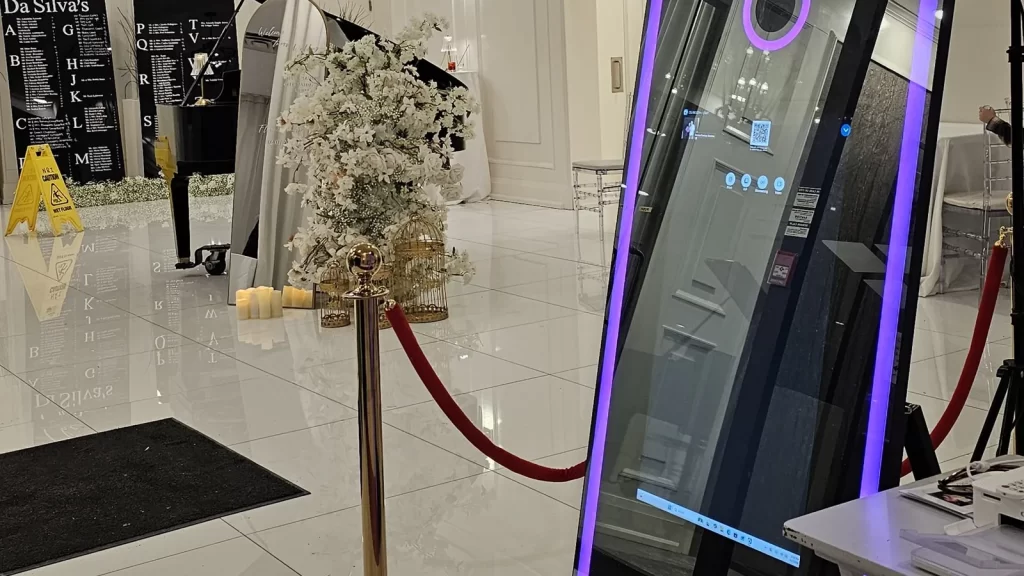
For an Oakville wedding, plan the booth around the change from arrivals and daylight to dinner and evening entertainment. The same corner can feel different once curtains close, lights dim and guests leave their tables. Choose the output first, then agree a location and operating window that still work after the room changes. The wedding photo booth service explains the available experiences; this guide focuses on fitting one into the flow of the day.
An attractive floor-plan square is only the start. Your photographer, decorator, venue team and DJ may all use the surrounding space at different times. Give each of them the same plan. That helps the booth remain visible without becoming a shortcut for servers, a background to speeches or a place where guests gather across an entrance. The aim is a smooth handover between parts of the reception, not a separate activity fighting the wedding programme.
Map where guests are at each stage
Begin with the invitation time and work forward. Where do guests arrive? Where do they leave coats and gifts? Where are drinks served? Where do they wait while the couple takes photographs? Then mark the dining room, dance floor and any outdoor area. If these are separate spaces, a booth in one location will not automatically serve them all. Decide which stage is most important to capture.
A reception before dinner can be a useful booth window when guests have time to mingle, especially if some relatives leave early. An evening window may better suit friends who want playful group pictures during dancing. Neither is inherently better. Discuss the trade-off with the people who know the guest list. Avoid scheduling all the hours around the couple’s availability if the wider group will be seated or away from the room for much of that period.
Test the daylight position as an evening position
A window-side corner can look wonderful during a venue visit. It may also receive direct sunlight at the time of your actual event, or reflect equipment lights after dark. Ask for photographs taken at a similar time of day if possible. The booth supplier should assess the position with the planned backdrop and equipment. Room orientation matters more than a general assumption that every lakeside or garden-facing space has the same lighting conditions.
The lighting conversation should include the decorator and DJ. Coloured room lighting can change the appearance of clothing, skin and backdrop materials. A moving light can also cross the camera area during a session. Rather than asking the entire reception to remain brightly lit, identify the booth zone and discuss how decorative lighting will be aimed. Test the final combination before opening, then recheck after the room moves into its evening setting.
Choose a keepsake that fits the wedding
A Signature Classic print booth suits couples who want a photograph guests can carry away. The Glam Booth offers black and white portraits, while the 360 Video Booth creates moving clips. Consider what your guests enjoy and how the output will sit beside the professional wedding photographs. The booth is an additional guest experience, not a substitute for documentary coverage of the ceremony and reception.
If you want both prints and messages, decide how the keepsake book will work. Guests need a clear place to write after their session without delaying the next group. An audio guest book serves a different purpose by recording voices. It needs a thoughtful sound environment and a simple invitation to leave a message. Placing it immediately beside a loud speaker because that is where the spare table stands can undermine its purpose.
Build the operating window from the real programme
Do not book a block of hours and hope the programme happens to fit. List the formal moments first: entrances, welcome, meal service, speeches, special dances and any performances. Mark when guests can reasonably move around. Then compare the possible booth windows. A short reception with one meal and a few speeches needs a different plan from a long programme with several distinct stages.
For a hypothetical example, consider a 5:30 pm reception, a 6:30 pm dinner and dancing planned for 8:30 pm. An early window reaches guests before they sit down, while an evening window reaches a different mood. If you want both, ask how a pause would be handled and whether it changes the quote. Do not describe a paused booth as operating, and do not assume the finish time can shift indefinitely if dinner is delayed.
The guide to choosing a wedding booth helps compare output and atmosphere. Use it alongside your programme rather than treating the equipment decision and the timing decision as separate purchases. The experience is shaped by both.
Make the dinner-to-dancing handover explicit
When dining ends, several things may happen together: chairs move, a dance floor opens, dessert appears and the DJ changes the lighting. Decide whether the booth is already in its final position. If it needs to move, the supplier must assess the route, access time and setup requirements. A relocation is a planned operation, not simply pushing a camera stand to another corner while guests walk around it.
Tell the venue coordinator who confirms that the area is ready. Tell the booth attendant who gives the opening cue. Tell the DJ what wording to use if an announcement is wanted. This small chain of responsibility prevents three people from giving contradictory directions. It also keeps the couple from becoming the default contact for every decision immediately after the first dance.
A useful handover note is concise: the booth is in the approved position, the surrounding aisle is clear, the final lighting has been tested, the collection station is ready, and the agreed operating window has begun. A real person should confirm these points. A timetable printed several weeks earlier cannot account for the furniture arrangement actually in front of the attendant.
Keep participation comfortable for different guests
Some guests will seek out the booth immediately. Others need an invitation, more time or a less crowded moment. Ask the attendant about an approach that accommodates small family groups, couples and guests who prefer a seated photograph where the configuration allows it. Confirm the accessible route with the venue and supplier rather than assuming a platform or narrow backdrop entrance suits everyone.
Do not make participation compulsory. A gentle invitation from a family member can be enough. If the couple wants photographs with particular relatives, identify a small number of groups and a practical window, without turning the booth into a second formal portrait schedule. Keep expectations realistic: the attendant can guide the experience, but cannot know every family relationship or locate guests who have left the room.
Design the print for the size people will hold
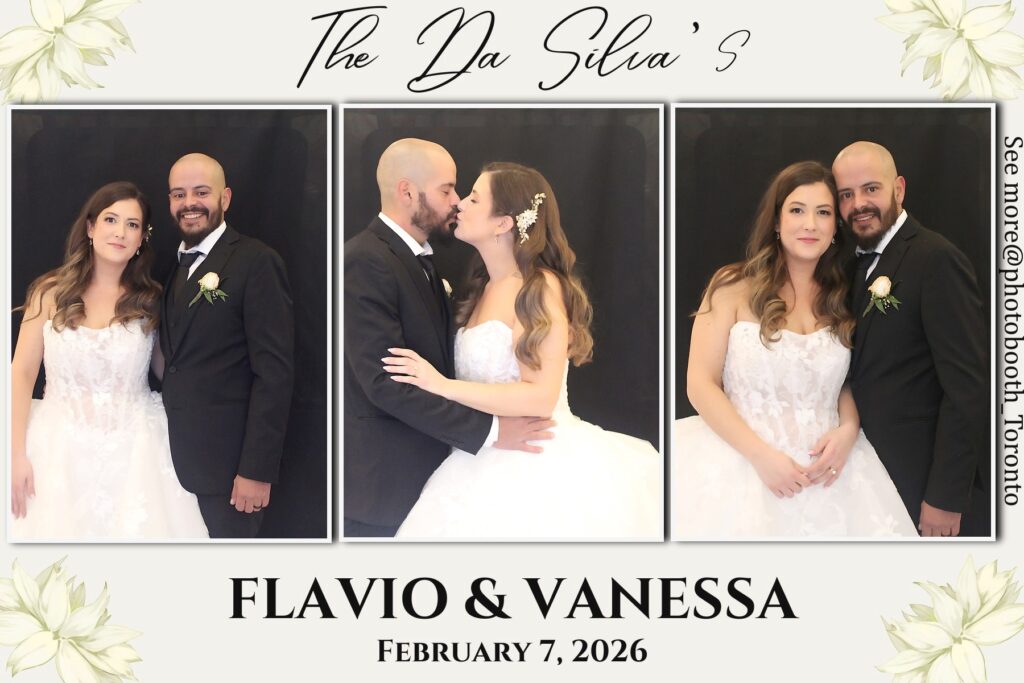
Your invitation suite can inspire the print, but it should not be copied without considering scale. A decorative typeface that looks elegant on a large card may be difficult to read on a narrow strip. Prioritize names, the date and one clear design idea. Leave enough space for the photographs. A wedding monogram can be effective when it remains legible rather than dominating every frame.
Approve a proof showing the actual format. Check spelling, date style, line breaks and contrast. If the wording uses more than one language, have someone fluent review the exact proof, not only the text in an email. Make one person responsible for the final approval and keep that version with the supplier. The print template and backdrop checklist explains the decisions that are easier to settle before the wedding week.
Give the keepsake table its own space
A book, pens, prints and instructions can occupy more usable space than expected once several people stop to write. Put the table close enough that guests understand the connection, but outside the capture area and the next group’s waiting position. Check that completed pages or loose prints cannot be knocked onto the floor by coats, bags or drinks. Agree who will collect and transport the book at the end.
If you want an additional copy for the book, confirm how it is produced and where it is placed. Do not leave the attendant to infer the plan from an unopened scrapbook on a table. A short instruction can invite a message without making guests feel they need to write a speech. The purpose is a personal record from the people who attended, not a perfect-looking object that nobody was comfortable touching.
Review access and the final hour together
The venue’s closing time and the booth’s last session are different deadlines. Ask when equipment can be packed, which route remains available, and whether other vendors will be loading out at the same time. If a lift or service entrance must be booked, include the end-of-night slot as well as arrival. The GTA travel and setup guide is useful when the ceremony and reception are in different places.
Plan how guests will hear that the booth is nearing the end of its booked window. A calm announcement gives interested groups a chance to participate without promising that everyone can join at the last minute. Keep the final photographs separate from the venue’s hard clearance deadline. Rushing the last group because furniture removal has already started is avoidable when the programme includes time for both activities.
Check the couple’s own opportunity to use the booth
The couple may spend the reception moving between photographs, greetings and formal moments. Do not assume they will naturally find time for the booth because it is in the same room. Choose a flexible opportunity with the coordinator, perhaps once priority greetings are complete or before a planned transition. Keep it short enough that the booth remains an activity for guests rather than becoming another long appointment in the couple’s day.
If a photograph with a particular relative matters, ask a family helper to gather that group when everyone is ready. The attendant should not have to stop the entire queue while someone searches the venue. A second opportunity can be identified in the programme if the first becomes impractical. This is a simple contingency, not a promise that the schedule will run exactly as printed.
The photographer should know if the couple wants documentary pictures of that booth moment. That allows the teams to coordinate rather than discover they are waiting for one another. Keep the requests proportionate: a few meaningful images, a comfortable experience and time to return to the celebration. The booth can add a memory without turning an already full wedding timetable into a checklist of compulsory photographs.
Send a brief that survives the wedding week
Keep the final booth brief to the information people will use: date, venue and room, approved location, access route, setup access, guest-facing hours, main contact, lighting note, final design proof and keepsake arrangements. Attach the latest programme and floor plan. If either changes, send the replacement clearly rather than leaving the supplier to choose between several email attachments.
For Oakville-specific service details, see the Oakville rental page. When you are ready, request a written wedding quote with the venue, date, guest count and the part of the day you want the booth to serve. A clear daylight-to-evening plan lets the equipment, design and operating hours support the wedding you have actually arranged.