
Planning a photo booth for a Newmarket or Aurora celebration starts with the handover between the venue, the host, and the booth attendant. Decide where the equipment can stay for the whole booking, when that space becomes available, and which moments guests should be free to take photos. A room that looks spacious during a tour can feel very different once dinner tables, a gift table, and a dance floor are in place.
Just Great Events serves celebrations in both communities. The Aurora photo booth rental page introduces local service, while the wedding photo booth options cover reception formats. This guide concentrates on choosing and handing over a club, hall, or home space so the activity fits the occasion.
Choose the room before choosing the backdrop
It is tempting to begin with a floral wall or a favourite booth photograph. First establish the room that the activity will occupy. Ask whether it is exclusive to your event, whether guests move between indoor and outdoor areas, and whether the same room changes from ceremony to dining or dancing. Each answer affects whether the booth can remain assembled.
For a club reception, walk through the entrance and the reception room with the event coordinator. Identify the equipment route and any shared areas. For a hall, confirm who controls the keys and when suppliers may enter. At home, stand in the proposed spot while another person walks the route a guest would take from the front door.
Take photographs with furniture in place, not only an empty-room picture. Include the ceiling, nearby doors, and the approach to the room. The provider can then discuss a specific footprint instead of assuming every open corner will accommodate the selected equipment.
Use a handover note for the venue team
A useful handover note has three parts: what must be ready, who approves it, and when it changes. The booth position should be clear of stored chairs and decorations before setup. The venue should identify the approved power supply and access route. The host should name someone who can approve the final position without interrupting the ceremony or welcome reception.
If a room is being turned over, show which supplier enters first. A decorator building a backdrop and an attendant assembling camera equipment cannot both rely on the same small corner at the same time. Discuss whether the backdrop belongs to the booth booking or a separate decorator, and who checks its stability and final placement.
Do not plan a move during guest service unless the provider has specifically agreed to it. Moving a booth means stopping sessions, securing equipment, relocating cables, and testing again. A single well-chosen position usually creates fewer interruptions than an attractive but temporary spot that must disappear halfway through the event.
Match the keepsake to the people attending
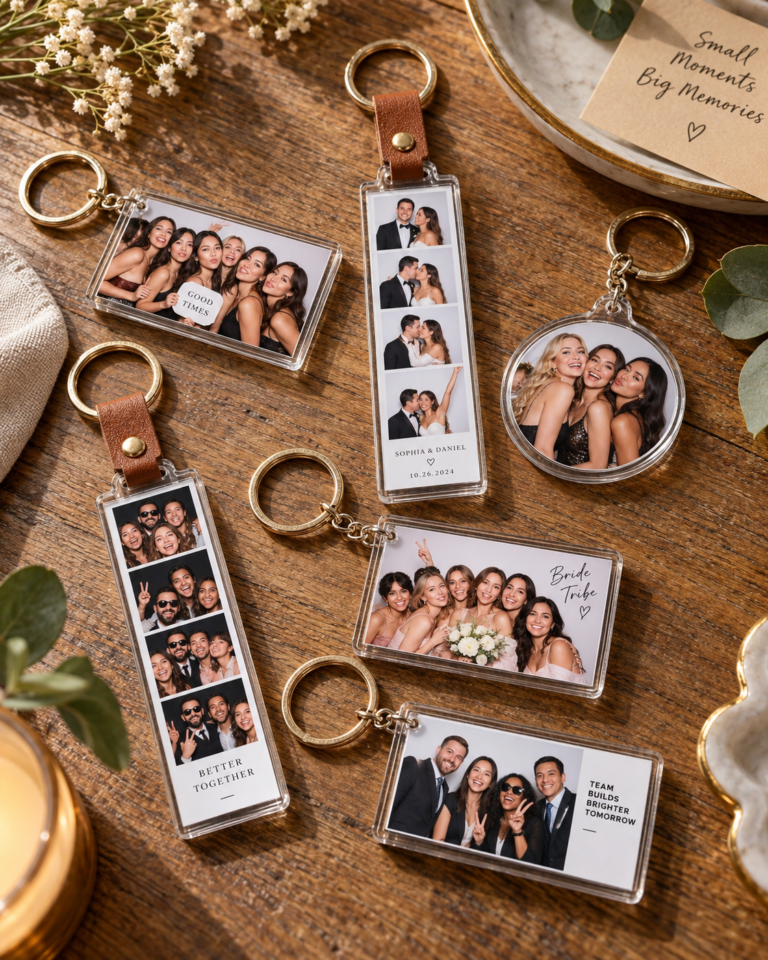
A Signature Classic Photo Booth suits a brief built around printed photos. A Glam Booth offers a black and white portrait style. A Keychain Photo Booth turns the photo into a physical favour, which needs its own collection arrangement. Video booths produce a different result and should be chosen because guests want the clip.
For a milestone birthday, consider whether the guest of honour wants relaxed family portraits, playful props, or a mixture. For an anniversary, leave room in the design for the couple’s names and a date without making the photographs too small. For a wedding, decide whether a guest-book copy is part of the desired experience and confirm how that would be handled.
Guests should not have to perform a pose to belong in the picture. Offer a straightforward portrait first, with props available for those who want them. This creates room for a wider range of ages and personalities without making assumptions about what any particular guest will enjoy.
For a home party, measure the route as well as the room
A finished basement is not automatically suitable simply because it has free floor space. The stairs, turns, doorway widths, ceiling features, and available power all matter. A garage or covered deck also needs an equipment and weather assessment. Send these details before selecting a booth rather than assuming an alternative location will work on the day.
Think about the everyday household tasks that continue during a party. Guests need access to washrooms, coats, drinks, and the kitchen. Keep the photo queue out of those paths. If a room serves several functions, decide which furniture can move and where it will go. A sofa moved into the corridor only transfers the obstruction.
Keep a place for handbags and drinks outside the camera area. This makes it easier for guests to join a photo without placing belongings against equipment. If children are attending, have a responsible adult handle the family schedule and supervision; the booth attendant’s equipment role does not replace the host’s arrangements for children.
For a club reception, follow the actual programme
Let the order of the event determine the booth hours. A reception with a long seated dinner may benefit from a later opening. A gathering with a short meal and extended mingling could use an earlier window. Ask when guests will be asked to sit and when they can circulate without missing a speech or ceremony.
Consider an illustrative wedding schedule with a reception, dinner, speeches, and dancing. The booth might be ready before the reception but begin sessions during a planned free period. If the couple wants a portrait with grandparents, that photo can happen at a quieter agreed moment instead of being left until everyone is on the dance floor.
Discuss pauses and the end time with the coordinator. An informal instruction to “stay until the party finishes” is not a clear booking. The written hours should describe when the attendant operates the booth, with any extension handled through the agreed contact and subject to availability.
Check daylight and evening lighting separately
A bright room can be appealing, but large windows change the way the background and faces appear. A booth’s own lighting helps establish the portrait, while direct sunlight or strong backlight can still influence the setup. Ask the attendant to assess the camera direction rather than assuming the view should always be behind the guests.
For an event that continues into evening, tell the venue and DJ which decorative lights will be used. Coloured light falling on faces can change the final photograph. A position that looks balanced in daylight may need adjustment when uplighting and dance-floor effects are switched on. Test with the actual evening lighting where possible.
Choose a backdrop that gives people visual separation from their clothing. A very busy pattern can compete with detailed formalwear. The backdrop does not need to repeat every element of the room. It can use one colour or texture from the event design while leaving the portraits clear.
Give keepsakes a collection plan
Printed photos and keychains are small enough to be misplaced during dinner. Put any collection or guest-book table where it is easy to use without blocking the next group. Identify which items belong to guests and which belong to the host. A labelled basket can be useful for unclaimed items, provided it does not reveal private information.
If a guest book is planned, confirm who provides the book and writing materials, how copies are allocated, and who encourages messages. Someone writing a long note should be able to step aside so another group can use the camera. Keep pens and adhesive materials away from the printer and other equipment.
For digital delivery, ask what guests need to do at the station and what the host will receive afterward. Follow the agreed privacy and sharing process. A guest choosing a personal copy is not the same as permission to publish the image on a business page or an open event album.
Review one design with the right decision-makers
Choose one person to collect edits from the family or planning team. Several separate messages can lead to contradictory versions of names, colours, or wording. Return a consolidated response and keep the approved proof easy to locate. Review it for accuracy before focusing on decorative details.
If an invitation supplies the design direction, use its palette and typography as a starting point rather than trying to fit the entire invitation on a print. A short event name and date may be enough. For bilingual wording, have a fluent reader check the final layout, including line breaks and name order.
The template and backdrop planning checklist provides a useful companion. It helps separate what appears in the photograph from what is printed around it, two choices that are often confused during design approval.
Reserve a quieter moment for important family photos
Some photographs matter more to the host than the number of sessions completed. A birthday guest may want a picture with siblings, while a couple may want a portrait with both sets of parents. Put those combinations on a short list and ask one person who knows the guests to gather them. The attendant should not have to identify relatives from unfamiliar names while a queue grows.
Keep that list realistic. The booth remains a voluntary activity, and a guest may need a seated position, a break, or assistance. Offer an earlier opportunity for anyone leaving before the evening ends. Once the priority groups have their photographs, let the station return to relaxed use. This preserves the reason for the keepsake without turning the whole celebration into a scheduled photo call.
Confirm who owns the room after the last session
At a club or rented hall, the end of the celebration can involve several people clearing different items. Identify who removes the guest book, who gathers personal decorations, and who remains available while the booth equipment is packed. A family member should not take apart a backdrop merely because it looks separate from the camera; it may belong to the supplier’s setup.
At home, keep the route out as clear as the route in. Coats and gifts often accumulate near a doorway during a party, so choose another collection area before packing begins. Give unclaimed favours to the named host contact and keep any delivery instructions with the booking. This small closing plan prevents the useful keepsakes from being mixed with empty boxes or left behind when the room is restored.
Bring the planning details into the quote
For Newmarket or Aurora, provide the exact address and room, the event date, guest count, requested operating hours, and the preferred booth format. Mention stairs, early setup, room changes, or outdoor ideas immediately. Ask which delivery and venue-related costs are included and which would appear separately. Do not infer a travel charge from another event’s quote.
Use the GTA travel and setup guide when the celebration uses more than one address. For a party specifically centred on a family home, the home birthday planning guide offers another way to think about furniture, guest flow, and timing without assuming a banquet-room layout.
Before the date, share a final note with the host contact, venue coordinator, and booth provider. It should identify the approved design, final location, arrival route, opening time, any planned pause, closing time, and collection contact. That short handover makes the decorative decisions workable.
When those details are ready, request a written photo booth quote. A clear room and programme brief gives the team something concrete to assess and gives the host a better basis for choosing the booth.