
A Markham wedding photo booth works best when its hours follow your actual programme and its print design is approved by the people who know the names and languages involved. Plan around the meal, formal moments and guest movement, then check the booth position under the room’s final lighting. The wedding photo booth service offers the formats; this guide helps coordinate them with a reception that may have several stages or more than one language.
Do not build the plan around assumptions about the family’s background or the type of venue. Some weddings have a long banquet programme, others a short dinner and an extended dance period. A tea ceremony, games, performances or bilingual announcements may be part of the day, but only if the couple chooses them. Ask for the real schedule and design requirements. That produces a more useful booth plan than a template based on what weddings in a particular city are supposed to look like.
Give each part of the programme a purpose
Begin by listing the moments when guests are expected to watch, listen or remain seated. Then identify the periods when they can move freely. The booth should offer an activity during those open periods without distracting from something the couple considers important. If a performance or speech is underway, a visible queue and repeated flash or movement may be unwelcome, depending on the room and setup.
Ask the planner or MC how transitions will be announced. A brief opening invitation can tell guests that the booth is available without turning it into the main event. If the booth pauses during a formal moment, agree how that pause is communicated and how it fits the booked hours. Do not leave the attendant to guess whether a quiet room means dinner service, an unexpected speech or simply a lull in participation.
Decide whether breaks between courses are useful
A multi-course dinner can include opportunities for photographs, but a gap on paper is not always a workable activity window. Guests need time to leave their tables, join a group, take a photograph and return. Servers also need clear routes. Discuss the sequence with the venue rather than opening the booth during every pause by default. One longer window may be more comfortable than several rushed starts and stops.
As an example, imagine a dinner with two planned breaks for entertainment and conversation. If the first break includes a couple’s game, it may be a poor time to encourage people away from their seats. A later break with no formal activity could work better. This is an illustrative planning situation, not a standard Markham banquet schedule. Your event’s actual priorities determine the decision.
If important relatives are likely to leave before dancing, consider an earlier opportunity for them. That does not require keeping the booth open throughout every course. A short planned family window before seating may be more useful, provided the supplier can quote and accommodate it. Compare the choices against the guest list, not an assumed ideal number of rental hours.
Keep the booth visible and the dining aisles clear
On the floor plan, mark the tables, stage, bar, buffet or service doors, and the route to the washrooms. The queue should remain outside the paths people need throughout the evening. Visibility matters, but the most prominent entrance is not necessarily the best location. Guests stopping to greet one another there can combine with the booth queue and slow the entire room.
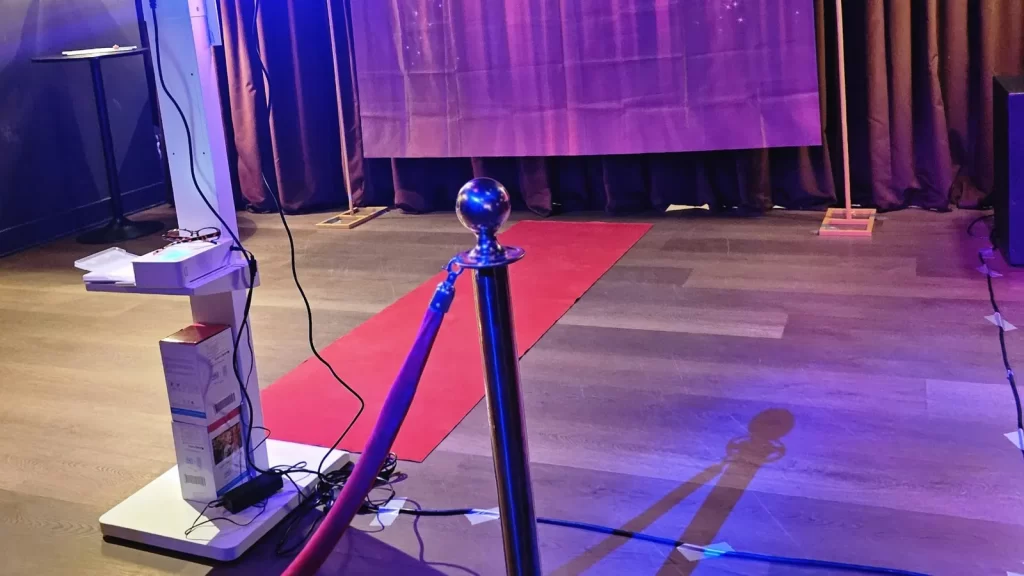
Ask the supplier to confirm the footprint for the selected booth and backdrop. Include the waiting position and print collection area in that discussion. A Mirror Photo Booth and a 360 Video Booth have different interactions and clearance considerations. Do not choose a moving-camera setup simply because the ballroom ceiling looks high. The equipment must fit the approved operating space, including nearby decorations.
Review light at the time of the reception
A room visit during the afternoon may not reveal the lighting used for dinner or dancing. Ask what changes later: curtains, chandeliers, uplighting, stage lights or moving fixtures. The booth has its own lighting, but the final result still needs to be tested in the actual environment. Coloured light striking guests or the backdrop can alter the look in ways a daytime walkthrough will not show.
Tell the decorator and DJ where the booth will stand. They may be able to aim effects so the photograph area remains consistent without changing the whole room. Do not prescribe a fixed distance as a universal cure; light strength and direction vary. Ask for a practical test with the chosen backdrop and clothing colours. A neutral sample image can reveal issues before the first guest group arrives.
Choose the language hierarchy before the typeface
When a print uses two languages, start by deciding what needs to appear in each. The couple’s names and wedding date may be enough. A long message repeated in two scripts can crowd the photographs and become difficult to read. One language does not have to be decorative or secondary; the design can give each an intentional place while preserving enough room for the images.
Supply the exact approved wording in editable text. Avoid asking a designer to copy names from a low-resolution screenshot or infer characters from an invitation photograph. If the names have more than one accepted spelling or form, choose the version wanted on the keepsake. A family member may prefer a formal name while friends use another. Resolve that distinction before the design proof becomes the place where the family debates it.
Review the complete proof with fluent readers
A proof review should cover meaning, spelling, character rendering, line breaks, punctuation and alignment. Have a fluent reader check each language in the actual design. Approval of the wording in a message is not the same as approval of its placement on a narrow strip. A font can fail to display a character correctly, or a line break can separate words in an awkward way.
Nominate one final approver who gathers the comments and returns a single response. If several relatives send revisions separately, a correct version can be overwritten by an older one. Label the final proof clearly and keep it with the event brief. After approval, any wording change should trigger another proof of the affected design. This is particularly useful when the printed date and the date of a separate ceremony differ.
The print template checklist covers size and readability. Treat the invitation as visual inspiration, not an obligation to squeeze the full invitation layout onto every photograph. A restrained design can still carry the same colours and personality.
Plan family groups without creating a second portrait session
The booth is a relaxed activity, while the wedding photographer may already have a formal family list. Decide which moments belong to each. If the couple wants a booth picture with grandparents, siblings or a particular group of friends, choose a manageable window and ask someone who knows the guests to gather them. The attendant can guide posing but cannot identify family members from a seating chart alone.
Keep the requests short enough that other guests can still participate. A long sequence of compulsory family combinations can turn an open activity into a waiting room. Consider inviting the priority groups early, then letting the booth operate naturally. If a guest would prefer a seated position or needs more time, discuss the available configuration in advance. The accessible route and comfortable participation matter more than keeping every session identical.
Match the output to how the memories will be kept
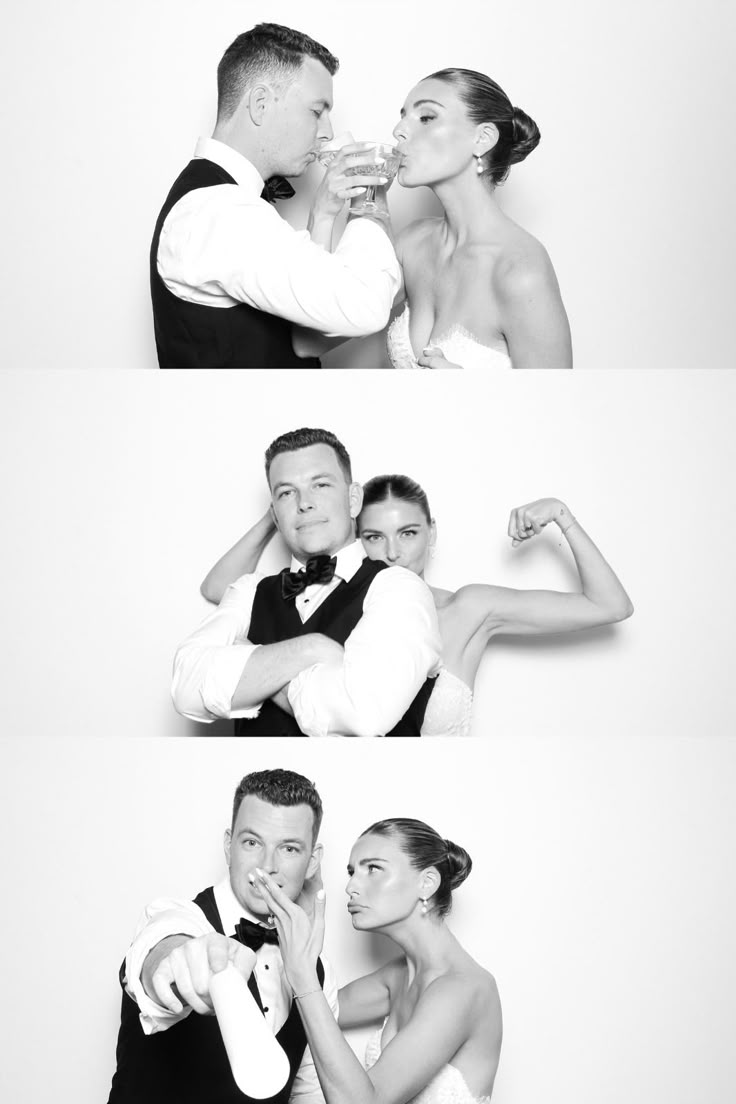
Printed strips suit a physical keepsake book or a photograph guests can take home. Black and white portraits from the Glam Booth offer a different visual treatment. Video clips capture movement, but they should not be mistaken for printed photographs. Decide which output supports the memory you want, then confirm the associated collection and sharing process.
If you add an audio guest book, think about the language of the greeting and whether guests understand the invitation. A short, welcoming prompt can leave room for people to speak naturally in whichever language they prefer. Place the recording point where conversation can be heard comfortably, subject to the supplier’s assessment. Loud music and a busy queue can make a meaningful message harder to leave.
Keep collection away from the next group
Guests who have finished taking photographs may want several copies, a moment to check their digital file or time to sign a book. Give those activities a clear place beside the booth rather than in front of the camera. Ask how print copies are handled and whether a book copy is part of the agreed arrangement. Do not rely on the phrase “unlimited” to explain the practical workflow.
A simple book instruction can be bilingual too, but keep it brief. People should understand where to place the print and whether to leave a message. A family helper can encourage participation without hovering over every page. Name the person who takes the book home and confirm how the host receives the digital collection. The end-of-night handover deserves as much clarity as the opening cue.
Coordinate changes through one contact
A reception programme can shift. The MC may extend a performance, a course may arrive later than planned or the couple may request a different photo moment. Choose one coordinator to communicate the revised sequence to the attendant. If the change affects the booked hours, involve the person authorized to approve it. A casual request from a guest should not be treated as an instruction to change the rental.
Keep the latest programme and floor plan together. Mark the booth’s planned windows and any periods when it should pause. The Mississauga banquet-layout guide adds detail on working around service routes, while the wedding booth comparison helps if the output remains undecided. These decisions are connected, so review them as a complete experience.
Check the wording used around the booth
The printed design is only one place where guests encounter words. An instruction sign, book prompt or opening announcement should use the same occasion name and tone. If a family helper will explain the activity in another language, give them the practical details: the output, collection point and planned hours. They should not have to infer these from the decorative print.
Keep translations focused on information guests need. A short invitation is easier to use than a lengthy explanation repeated in several languages. Have the relevant fluent readers review any translated wording that the hosts supply, and confirm the supplier can display it as intended. Clear, respectful communication can make guests feel included without overcrowding the photograph or turning the booth area into a wall of text.
Build a brief that the whole team can use
Your final brief should include the event and venue address, room name, access times, approved booth position, operating window, formal programme, final design proof and contact names. Add the language requirements that affect guest instructions, without assuming that every supplier speaks those languages. If interpretation is needed for an event-day decision, identify who can help. Clear communication is a practical service to the guests and the team.
For local options, review the Markham photo booth service. Then request a written wedding quote with the date, guest count, programme and desired output. Include the wording you want on the print when it is ready. A considered schedule and a carefully approved design let the booth reflect the couple and their families without making the reception more complicated.