
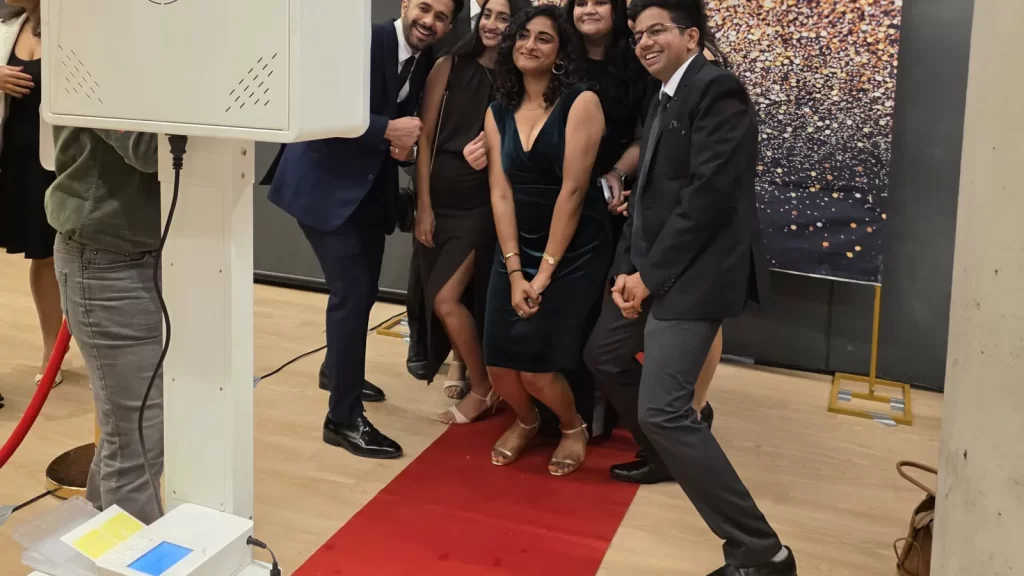
A Vaughan photo booth budget is easiest to control when every quote describes the same event. Compare the booth format, the hours guests can actually use it, delivery arrangements, print or video output, and the extras you want. A lower starting rate means little if the booking leaves out something your reception needs. Start with the available photo booths for Vaughan events, then use this guide to turn your preferred setup into a clear scope.
The useful question is not simply how much a booth costs. It is what you receive for the total, whether the booth suits the room, and how the booking handles the schedule you have planned. A wedding reception, company dinner and afternoon birthday can use the same equipment very differently. The decisions below help you compare those differences without paying for hours or decorations that have no clear job.
Establish the outcome before comparing equipment
Decide what guests should take home. A print booth makes a physical keepsake. A video booth makes a clip. A digital booth prioritizes sharing without a printer. A keychain option changes the favour guests receive, while an audio guest book collects spoken messages. These are different outputs, so they should not be treated as interchangeable lines in a price comparison. If printed photographs are essential, confirm them explicitly before considering a video-led option.
For example, a hypothetical anniversary dinner might prioritize a printed photograph of each family group and a copy for a keepsake book. A product celebration might instead want a short branded clip. The first event should compare print formats, copy arrangements and the book station. The second should compare capture style, overlay design and delivery of the clip. Buying the most elaborate equipment does not resolve a mismatch between the output and the occasion.
Read starting prices as the beginning of the calculation
Just Great Events publishes a Signature Classic starting rate of $450 for two hours and $150 for each additional hour. That makes three operating hours $600 before any separately quoted additions. This is arithmetic using the published rate, not a complete quote for every Vaughan address. The venue, any chosen extras and the final booking scope still need to be checked. Use the Toronto booth pricing guide as the central reference for the other formats rather than assuming one booth’s rate applies to another.
The original equipment comparison also matters: the 360 Video Booth has a published starting rate of $400 for two hours, so it is not automatically more expensive than the Signature Classic. A price difference does not tell you which option is more suitable. Video and printed keepsakes solve different needs. Ask for the actual format you want, then compare totals with the same date, venue and operating window attached.
Separate operating time from access time
The period when guests can use the booth is not the same as the period when a supplier needs access to the room. Equipment has to arrive, be positioned, be tested and eventually be packed away. A venue may offer an early access window even when the celebration begins much later. Give both times to the supplier. A quote that only says “three hours” leaves too much room for different interpretations.
Write the proposed guest-facing window as a start and finish time. Separately record when the room opens to vendors, when guests enter, when the formal programme takes place, and when the venue requires the space cleared. If there is a long gap between setup and operation, ask how that gap is treated. Do not assume it is free, or that it consumes the hours you booked. The written scope should answer this before the timetable is circulated.
Choose useful hours instead of the longest package
A longer booking is valuable only if guests have opportunities to participate. Consider the meal, speeches, performances, cake and planned departures. Some groups enjoy a booth during a reception before dinner; others are more available once the formal programme ends. There is no universal rule that cocktail hour is wasted or that every evening needs four hours. The right window follows the actual invitation and programme.
As a planning example, imagine guests arrive at 6 pm, dinner begins at 7 pm and dancing starts at 8:30 pm. A booth running from 6 pm to 8 pm reaches early arrivals but overlaps dinner. One running from 8:30 pm reaches the dance period but may miss relatives leaving early. A split window may suit the event, but it needs a specific quote. Compare these choices against your guests’ likely movements instead of treating the longest duration as the safest answer.
Compare the print and sharing arrangements precisely
“Unlimited sessions” describes participation during the booked time; it does not explain every detail of printing. Ask what print format is included, how group copies are handled, whether a keepsake book copy is wanted, and how reprints are managed. These questions are particularly useful when a large family group wants individual copies. They also prevent a comparison between a print-based package and a digital-only package from looking cheaper than it really is.
The digital side deserves the same clarity. Find out how guests receive their own files and how the host receives the collection. If you need a private gallery, confirm who can access it and how you intend to share it with guests. Avoid adding marketing data collection merely because the equipment supports it. At a private celebration, receiving a photograph should remain a straightforward part of the guest experience, with expectations explained in advance.
Give every add-on a specific purpose
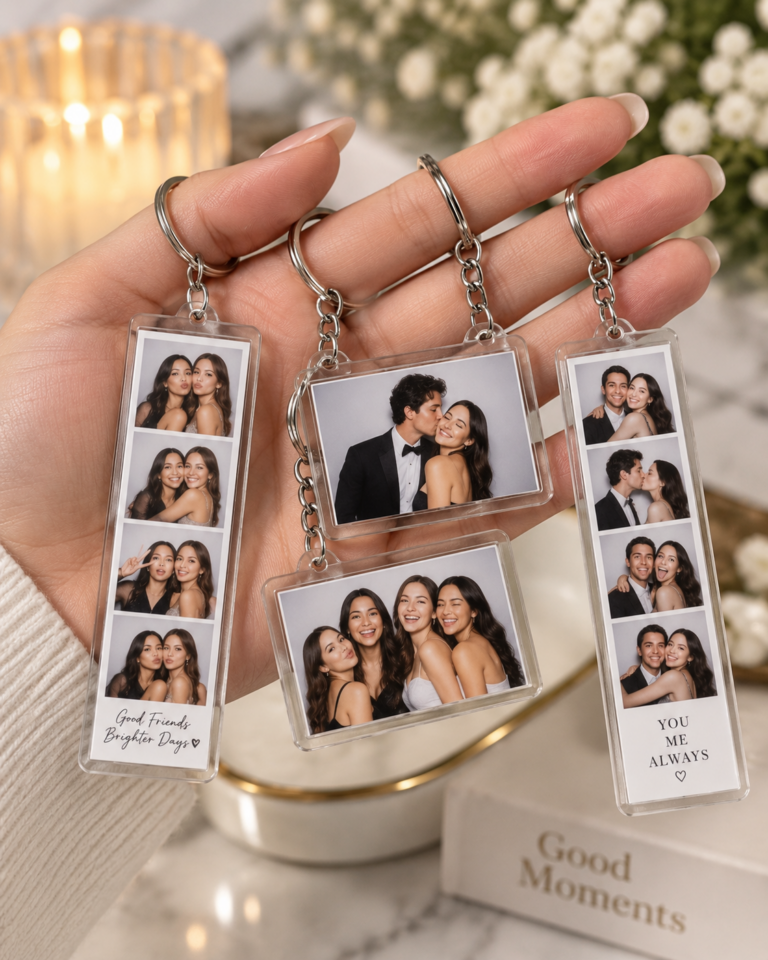
An add-on is easiest to evaluate when you can finish the sentence “we want this because…” A floral surround might connect the booth to the wedding styling. A keychain may serve as the favour. An audio guest book may preserve messages from relatives. A second photo station may offer a different experience or spread participation across a large room. If the purpose is vague, leave the option separate until the main setup is settled.
Keep decorative scope visible. A backdrop, a freestanding floral wall and flowers placed around equipment are not necessarily the same thing. Clarify the design, approximate arrangement, setup responsibilities and how the display fits the approved floor plan. Compare the props and print-design checklist with your mood board before adding multiple decorative elements that compete for the same space.
Include the venue address and access conditions
Vaughan is the location label, but the exact address and room determine the delivery plan. Send the venue name, room name, entrance instructions and any stairs or elevator requirements. If a booking is in Woodbridge, Thornhill or Kleinburg, use the actual address rather than assuming the place name answers the travel question. Any travel or access-related line should be visible in the quote you approve.
A venue walk-through can expose a cost issue before it becomes a day-of problem. The easiest loading entrance may close early. A hallway might be unavailable during another function. A room might need furniture moved before equipment can enter. These are possibilities to check, not assumptions about all local venues. The Woodbridge and Thornhill hall planning guide covers how a booth fits around a banquet programme and shared circulation.
Use one comparison sheet for all options
Put the main decisions on a single page: booth format, output, guest-facing hours, access times, staffing, template design, backdrop, props, sharing, host files, travel, selected extras and quoted total. Add a final column for anything still to confirm. This is more useful than comparing screenshots of package names. A package title cannot tell you whether a venue-specific requirement has been considered.
Do not score each quote by the number of included items alone. Five extras that guests will not use can be less useful than one well-planned print station. Similarly, a second attendant and a second complete booth are different resources. Ask what operational issue each option solves. Extra help can organize props or the keepsake station, but it does not automatically create a second camera position or double the number of sessions.
Protect the budget when the programme changes
Once the main scope is clear, decide who can request changes. A host, planner and venue manager may each have good reasons to adjust the timetable, but the supplier needs one authorized contact for commercial decisions. Record that person alongside the event-day contact. They can be the same person, although a couple getting married may prefer someone else to manage practical questions during the reception.
If dinner moves later, ask whether the booth operating window can move and what the revised finish time would be. If the guest count rises, revisit participation and layout before automatically adding hours. If a different room becomes available, review access and equipment placement again. The correct response depends on the change. Keep the latest written quote and latest programme together so the team is not following two different versions.
Keep the original scope beside every revised option
When an option changes, compare it against the original scope rather than reading the new total in isolation. Suppose the initial plan was one print booth for a defined evening window. The revised option adds a keychain favour and a longer window. Record those as two separate decisions. That makes it clear whether the increase buys more participation time, a different keepsake or both. It also helps you remove one addition without accidentally changing the main booking.
A useful comparison names the consequence of each choice. Shortening the hours may miss guests arriving later. Removing a decorative surround changes the appearance but may leave the core photo experience intact. Changing from prints to digital output changes what guests carry home. The organizer can then decide what matters most instead of treating every reduction as equivalent. Ask for the revised written total once the preferred combination is settled.
Keep the latest approved scope accessible to the person managing the event. If a relative asks for an extra hour or a different favour on the night, that contact can check what is already included before making a decision. This avoids paying twice for something that was merely described differently in an earlier conversation, and it keeps the final arrangement understandable to everyone delivering it.
Decide where additional spending improves the experience
Prioritize problems guests will notice. A convenient position, a legible print design and time to participate usually deserve attention before another decorative layer. A clear collection point can help more than a larger prop table when guests are waiting for prints. A planned announcement can help people find the booth more effectively than moving it into a busy doorway. These are planning choices, not promises of a particular queue length.
Before making the final decision, describe the booking back in one sentence: the booth, the occasion, the venue, the operating window and the intended keepsake. If that sentence is clear and the quote matches it, the budget has a purpose. Request a written Vaughan event quote with the date, full address, guest count and preferred output. Include your programme and any venue access notes so the total can reflect the event you are actually planning.