
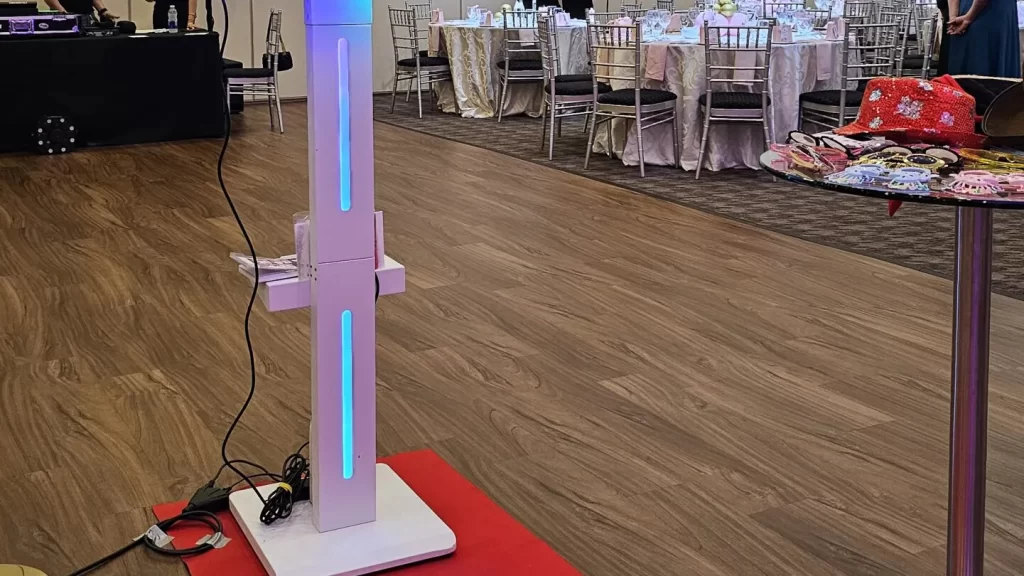
A photo booth in a Woodbridge or Thornhill banquet hall works best when its queue, opening hours, and equipment route are included in the reception plan. The room’s total capacity does not tell you how many guests will use the booth at once. A large crowd may arrive gradually, or it may gather immediately after speeches, a performance, or the opening of the dance floor.
Just Great Events provides photo booth rentals in Vaughan and wedding photo booth options for celebrations in the area. This guide concentrates on banquet-room coordination: shared corridors, group photographs, service routes, and the moment when everyone wants a turn.
Ask which spaces belong to your event
A venue may have several rooms connected by a foyer or delivery corridor. Confirm which areas your event can use, whether another booking shares access, and whether the booth must stay inside the rented room. A display placed in a shared entrance without approval can confuse guests or interrupt another celebration.
Ask the coordinator to mark the assigned room and entrance on the floor plan. The booth should be recognizable as part of your event, with the correct names or branding on its design. If there is a common foyer, agree on how guests find the activity without treating the hallway as an extension of the reception.
Give suppliers the room name, not only the venue address. Include an arrival contact who can meet them before the host is occupied. If several families or planning teams are involved, designate one person to approve the booth position so the attendant does not receive contradictory instructions from different guests.
Draw the queue before adding decor
The booth footprint should include the camera, background, lighting, attendant, and any printer or sharing equipment. Then draw the people waiting. Leave a separate way out for a group finishing its session. Without that route, guests collecting prints can become part of the next group’s queue.
Keep the line away from kitchen doors, emergency exits, buffet service, and the entrance to the dance floor. A booth near the social centre of the room can be inviting, but being near the bar does not mean sharing the bar queue. Walk the plan with the venue coordinator and ask what will happen when staff are carrying trays through the space.
A large decorative wall can change the available width. Make the decorator and booth provider work from the same dimensions. Do not approve a narrow booth position first and then add flower stands, large letters, or a guest-book table into the space reserved for people.
Think in groups rather than a guest-count threshold
There is no single guest count at which every event needs two booths. The answer depends on participation, group size, the session format, the hours available, and whether demand arrives in a short burst. A wedding with several long free periods differs from an awards dinner where everyone has one brief interval.
For an illustrative calculation, imagine 240 guests participating in groups averaging four people. That would be roughly 60 group visits before repeat sessions are considered. It is not a forecast: some guests may skip the booth, others may return with different friends, and the average group may be smaller. Use the example to ask about practical capacity, not to promise that a given number of sessions will be completed.
An extra attendant can help guide guests or manage output, but does not necessarily double camera capacity. A second booth adds a separate capture point, while a separate collection area can reduce congestion around an existing booth. Ask which bottleneck the proposed addition is intended to solve.
Choose complementary formats if booking two stations
A Signature Classic Photo Booth provides printed photographs. A 360 Video Booth produces moving clips and requires a clear, protected camera area. Combining them can offer two distinct experiences, but only if the room can accommodate both without squeezing the guest routes.
Two similar print booths may be more appropriate when the priority is getting many groups photographed in a short window. A Mirror Photo Booth may suit a different presentation preference, while a Keychain Photo Booth introduces a keepsake collection task. Choose the result first, then confirm how each station will run.
Use consistent names and dates across the designs. If the stations have different outputs, make that obvious to guests. People should know whether they are joining a print portrait, a video activity, or a favour station before they wait.
Build booth hours around the reception programme
The meal and formal programme determine when guests can leave their seats. Discuss the actual order of entrances, courses, speeches, performances, cake presentation, and dancing. Do not assume a timeline based on a family’s cultural background. Ask the hosts which moments matter and when they want the room’s attention focused elsewhere.
One approach is an opening period during mingling, a planned pause for the main programme, and a later period when guests circulate again. Another is a single continuous evening window. Neither is automatically better. Compare the usable guest time and how pauses or idle periods are treated in the booking.
Have the coordinator or MC give the attendant the agreed cue when the programme changes. A speech running late should not lead several guests to negotiate new hours independently. The final operating period should remain clear, with any extension discussed through the authorized contact.
Reserve photographs with the people who may leave early
Some guests cannot stay through the whole reception. If the couple or guest of honour wants a photo with particular relatives, schedule a brief opportunity while those people are present. Do not leave every important combination to the last hour of dancing.
Give a family contact a short list of priority groups. Keep it separate from the booth queue and avoid calling people across the room during speeches. The attendant can help with positioning, but someone who knows the guests is better placed to gather them.
Offer a straightforward portrait without props and discuss seated or accessible positioning when needed. A large group may need to be photographed in smaller combinations for clear faces and a comfortable arrangement. The goal is a photograph people value, rather than fitting the largest possible crowd into one frame.
Coordinate lighting without flattening the room’s atmosphere
Banquet-room lighting often serves several purposes: dining, stage focus, decor, and dancing. The photo station needs a predictable area within that design. Coloured light aimed at faces or the backdrop may affect the portrait, even when the booth has its own lighting. Ask the DJ or lighting team to review the booth position.
Test with the room’s planned evening effects where possible. A test made while all ceiling lights are on may not show what happens after dinner. Keep the camera’s background separate from a bright screen or moving effect that pulls attention away from the people in the picture.
The backdrop should carry the event palette without reproducing the entire room design. A simple colour or texture can work alongside detailed floral decor. Review how dark jackets, pale dresses, and patterned clothing will look against it, while leaving final exposure and lighting decisions to the operator.
Handle multilingual wording as a design approval task
If a print includes more than one language, ask the host to supply the final text and name order. Have a fluent reader check the proof, including line breaks and punctuation. The operator should not be expected to guess a translation or decide which spelling the family prefers.
A short message may be clearer than several sentences. At print size, long wording can crowd the photo areas. Consider keeping the event name and date on the template while using a separate sign for a longer welcome. The design checklist for prints and backdrops helps distinguish these elements.
Consolidate feedback from both hosts or planning teams before returning edits. Mark one version as approved so a later forwarded message does not accidentally restore an older name, colour, or date.
Keep print collection separate from the camera
A guest-book station should not force people to write directly in front of the next group. Put the book and pens beside the activity with enough room to step away. Confirm who supplies the book, how any additional copy is handled, and who takes the finished book home.
If keychains or other keepsakes are part of the booking, establish a collection arrangement that the attendant can explain consistently. Avoid placing personal identifiers on an open table unnecessarily. At the end of the night, give unclaimed items to the named host contact rather than leaving them with whichever guest happens to remain.
Digital sharing also deserves a clear explanation. Tell guests how to obtain their own files through the agreed process. Permission to receive a photo is separate from permission for the host or a business to use it publicly. Use the event’s approved sharing arrangements throughout the night.
Prepare for packing while the venue is still busy
The end of service is not the end of equipment handling. Confirm when packing can begin, which route remains available, and whether other suppliers will be using it at the same time. A venue with several events may need coordinated departures as well as coordinated arrivals.
Keep the booth area clear of bags, coats, and gifts that accumulate late in the evening. Let the attendant secure the equipment rather than asking guests to move it. Identify who stays to resolve access questions after the couple or company organizer has left.
Share any venue paperwork requirements early. If the venue requests insurance documents or other approvals, have the booth provider confirm what it can supply for that event. Do not assume a particular policy amount or vendor approval merely because equipment can fit in the room.
Give the MC one clear announcement
An announcement is most useful when it tells guests what the booth does, where it is, and when they can visit. A long explanation of equipment features is unnecessary during a reception. Ask the MC to use the agreed output description, especially when one station makes prints and another records video. That prevents guests from joining the wrong line expecting a different keepsake.
Coordinate the timing with the kitchen and programme. A gentle invitation during a free period can distribute participation, while calling everyone over immediately before a course may create a rush that neither the booth nor the service team wants. If priority family photographs are planned, handle those through the family contact rather than announcing a long list of names to the room. The public message can remain brief while the detailed coordination stays with the people managing the event.
Compare a complete banquet-room plan
Ask for the booth format, operating hours, expected setup arrangement, approved room, delivery details, and optional stations to appear clearly in the quote. Use the Vaughan cost planning guide to understand scope, and the large wedding guest-flow guide for another perspective on group participation.
For a Woodbridge or Thornhill celebration, send the venue, room name, date, guest count, and a draft programme. Include a floor plan if available. Request a written quote that reflects the actual use of the hall, so the booth contributes to the celebration without taking over its busiest routes.