
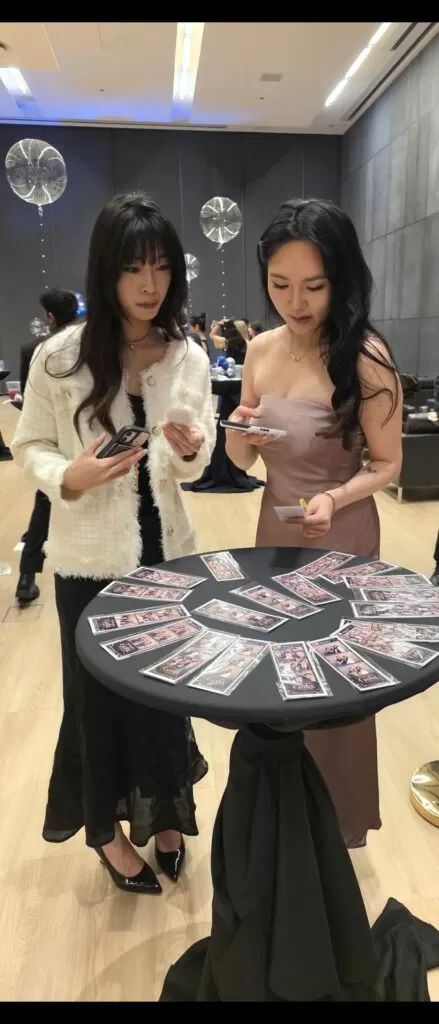
A photo booth at a gender reveal party is useful for guest portraits before the announcement and celebratory pictures afterwards. Keep the first design neutral if the result is a surprise, confirm exactly when any artwork changes, and arrange separate coverage if you want photographs of the live reactions. A fixed booth cannot be assumed to capture a moment happening elsewhere in the room.
The party photo booth service offers a starting point for discussing a Toronto celebration. This guide focuses on the announcement’s practical effect on photographs: protecting the surprise, choosing approved wording, separating guest activity from the main moment and leaving room for the family’s own preferences. It does not require a particular colour scheme, prediction game or style of reveal.
Decide what you want the photographs to record
There are several possible goals: portraits of guests who came to celebrate, a picture of the family before the news, a keepsake after the announcement or reactions at the exact moment. These goals need different arrangements. Write them down separately so the provider can explain what the booked booth can produce and what requires another photographer or a different camera position.
If the main goal is a guest keepsake, the booth can operate around the announcement without trying to document it. If reactions matter most, prioritise the coverage of that moment and treat the booth as a complementary activity. Avoid assuming that adding equipment automatically covers every angle. The event organiser should know who is responsible for each kind of photograph before guests arrive.
Keep the surprise out of the early artwork
Check every visible element, including the print border, welcome screen, signs, backdrop and any example image. A result can be revealed accidentally by a file name on a screen, a preloaded template or a supplier discussing the design within earshot. Keep the working brief limited to the people who need to know, and give the provider a clear contact for any question about confidential details.
If there will be different artwork after the announcement, confirm that the selected setup supports the change and identify who gives the signal. Do not rely on an attendant guessing that the reveal has finished. A single named organiser should communicate the change. Where a mid-event switch is unnecessary or uncertain, one neutral design can serve the whole party and avoid that additional dependency.
Let the family approve the language
Ask what the family wants the event and print to say, and use their chosen wording consistently. Avoid adding slogans about future hobbies, personalities or family roles. A simple message celebrating the family can remain meaningful without making predictions about the child. If the hosts want a traditional phrase or colour convention, confirm it directly rather than assuming it from the type of party.
Names and personal details need the same care. The family may not want a baby’s name or expected arrival period shared publicly. A party date and an approved celebration title are enough for a keepsake. Review bilingual text with a fluent person chosen by the host, and keep the final approved wording in one document so multiple helpers do not send conflicting revisions.
Choose a design that works before and after
A neutral palette can keep the focus on the people and allow the same backdrop to work throughout the party. Botanical details, metallic accents, simple shapes or a family-approved theme can provide character without signalling the result. A neutral design is also practical when the announcement changes the room’s decorations but the booth needs to continue operating without a lengthy reset.
Judge the backdrop with realistic groups in front of it. Important wording placed at face height may be hidden, while a dense pattern can make the photograph busy. Keep signs and decorative elements outside the main standing or seating area. The backdrop and print-template checklist helps turn a visual idea into a usable photo setting, with attention to readability and the space occupied by guests.
Select the output around the guest experience
Printed photographs give guests a physical reminder of the gathering. Digital pictures can be delivered through the methods supported by the selected booth. A moving clip is a different output, so a video experience should be chosen because the hosts and guests want that style of memory. Do not expect a 360 video booking to produce the same print as a still-photo booth.
Compare the Signature Classic with a Digital Photo Booth if the main decision is paper versus digital keepsakes. Ask how the actual setup accommodates family groups and guests who prefer a quieter portrait. Keep participation voluntary. A guest does not need to make a prediction, hold a sign or perform a pose to deserve a photograph at the celebration.
Separate the reveal area from the booth
The main announcement may need a gathering space, sightlines and a designated photographer. The booth needs its own equipment position, waiting area and route in and out. Combining both in a small corner can make it difficult to see the reveal and can leave guests standing around equipment. Ask the venue and provider to review the two activities together on the room plan.
Keep any reveal materials away from the booth equipment and follow the venue’s rules for decorations and special effects. Do not introduce smoke, powder, liquids, projectiles or similar effects near a setup without appropriate professional and venue approval. The photo-booth plan should not become an instruction for operating a reveal device. A simple announcement with a separate portrait afterwards can be easier to coordinate and photograph clearly.
Give the announcement a clear place in the schedule
Mark guest arrival, food service, the announcement and any other activities. Tell the attendant when to stop inviting new sessions so the room can gather. If guests are already taking a photograph, the host needs a reasonable transition rather than abruptly beginning the reveal while part of the group is distracted. A brief pause can protect the shared moment when it is included in the agreed schedule.
As a planning example, the booth could provide neutral guest portraits during arrivals, pause for the announcement and reopen for family pictures afterwards. That does not establish a standard booking duration or guarantee a free pause. Confirm active hours, idle time and any design change in the quote. The organiser should provide the final signal and keep the provider informed if the programme moves.
Plan the first family picture after the news
If the family wants a photograph immediately afterwards, reserve a calm moment for it. Guests may be congratulating them, taking phone pictures or moving around the room, so a helper should gather only the intended group. Keep the portrait list short. The family should not feel required to move straight from an emotional announcement into a long sequence of staged photographs.
Allow them to choose the pace. If they prefer to spend time with guests first, the booth can remain available for other groups. A useful plan gives the organiser options rather than forcing a rigid sequence. If a separate photographer is covering reactions, clarify when that photographer and the booth will each be used so guests are not being directed to several cameras at once.
Avoid turning predictions into pressure
Some hosts enjoy a prediction game, while others do not. If one is part of the celebration, keep it optional and light. A photograph should not require a guest to choose a side or make a statement they do not want to make. Avoid scripts that present one result as more desirable or encourage jokes about disappointment. The keepsake should centre on the people celebrating together.
Props can be purely celebratory, with a choice of simple signs or no props at all. Ask the family to approve the collection, especially if friends are bringing additional items. A single unsuitable joke can appear in many pictures before an organiser notices it. The attendant should receive a clear brief about which props belong to the setup and who can approve changes during the event.
Keep comfort and access in the plan
Discuss whether guests can participate seated, how the camera is positioned and what space is needed for mobility aids. A still-photo setup on the floor may offer different options from a platform-based experience, so ask about the specific equipment. Keep the queue away from places where guests need to rest, collect food or move between rooms. Comfort should be planned, not improvised after the room is full.
If children attend, parents or designated adults should remain responsible for their supervision. The booth attendant’s role is the booked photo experience. Keep belongings, drinks and decorative pieces out of the camera and equipment area. Tell the provider about relevant practical needs without circulating private family or health information that is unnecessary for arranging the setup.
Decide when the news can be shared
The family may want to contact relatives who could not attend before photographs appear publicly. Agree on that preference and tell guests in straightforward language. Confirm whether the selected digital delivery method encourages immediate sharing and how it can fit the family’s wishes. A printed keepsake and a public announcement are different decisions, even when both come from the same photograph.
Identify who receives the full event collection and how access will be managed. Do not call a gallery private without understanding its controls and distribution. Keep supplier promotion separate from guests receiving their own images. The family should retain a clear choice about broader publication, and guests should know the event’s approach before they join a session rather than discovering it afterwards.
Compare the complete event arrangement
The quote should reflect the real work: delivery, setup, guest operating hours, output, artwork, backdrop and any planned pause or template change. If the provider must arrive early to avoid spoiling a surprise, include that access window. If a helper will bring confidential artwork, confirm how it will be supplied and approved rather than handing over a new file during the party.
The Toronto photo booth cost guide explains published options and scope considerations. For a celebration combined with a shower, the baby shower photo guide adds ideas about comfortable hosting and family portraits. Keep the two purposes clear: a shower can run as a relaxed gathering, while an announcement adds a specific timing and communication requirement.
Give one organiser the final brief
Before the event, collect the approved wording, neutral and optional later artwork, venue plan, timetable and sharing preferences in one place. Name the person who can authorise a change and confirm who is covering live reactions. Check that the provider understands which details are confidential and that the venue has approved the physical setup. Avoid making the family manage equipment questions during the announcement.
Request a written quote with the date, address, guest count and desired photo experience. A clear before-and-after plan lets the booth support the celebration without spoiling its surprise or competing with the moment itself. The result should be a collection of comfortable, personal photographs that the family can enjoy and share on its own terms.