
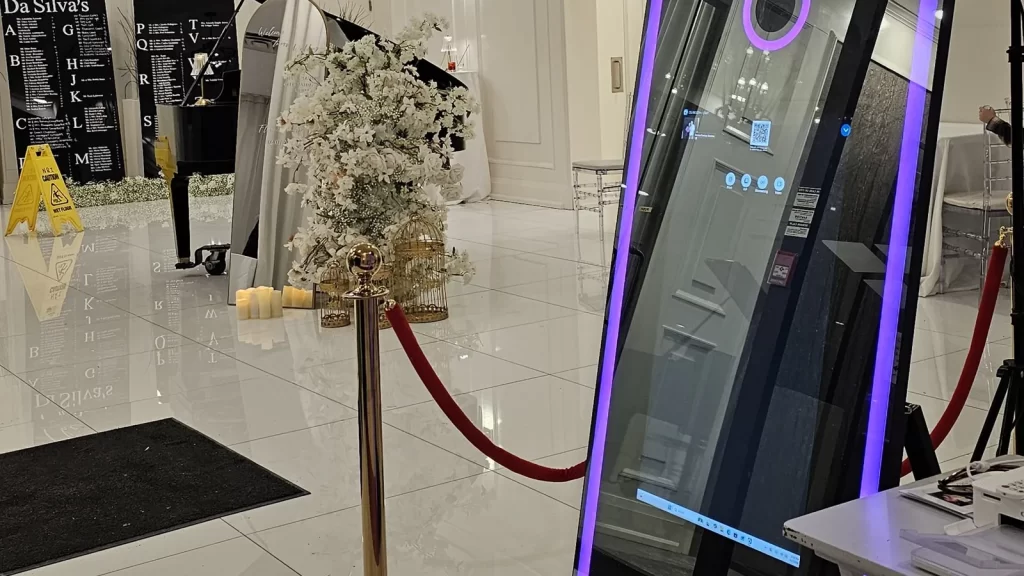
A gala photo booth works best as a portrait experience that fits the reception, meal, and formal programme. Choose a position that looks intentional in the room, keep the artwork restrained, and plan pauses around speeches and awards. Guests should be able to take a polished photograph without missing the moment they came to celebrate.
The corporate event photo booth service is a starting point for Toronto galas and formal receptions. Explain whether the evening centres on awards, a cause, an anniversary, or a professional community. The booth can share the event’s visual identity while keeping its own purpose clear: a guest portrait, rather than stage photography or a complete record of the programme.
Distinguish the booth from the arrival photograph
A step-and-repeat wall, a staffed red-carpet portrait area, and a photo booth can look similar on a floor plan but operate differently. A traditional arrival photograph may be managed by a photographer and a host. A booth typically gives guests a defined photo or video interaction and an agreed output. Decide which experience the gala needs.
If both are included, give them separate jobs. The arrival photographer might document honourees and invited groups, while the booth offers voluntary portraits later in the reception. Do not send guests through two almost identical queues without explaining the difference. A second photo station should add something useful.
Ask which portraits are essential for the organiser’s records. Stage awards, a full committee photograph, and a guest’s keepsake are not interchangeable. If a photographer is needed for formal coverage, plan that service directly rather than assuming the booth attendant can leave the station to capture the stage.
Select a style that belongs in the room
Start with the gala’s existing design: invitation, room colours, stage graphics, and dress expectations. The booth does not need to match every detail, but it should feel connected. A calm backdrop and a readable event title often provide a stronger portrait setting than a crowded arrangement of props and decorative text.
A Glam Booth offers a black-and-white portrait style, while a mirror or classic print booth creates a different experience. Compare the actual outputs and operating requirements. The equipment’s appearance is only one consideration; how the finished photograph looks matters just as much.
If formal clothing includes dark suits, reflective fabrics, or detailed accessories, ask the supplier how the selected backdrop and lighting will work with them. Avoid promising that a particular colour will photograph perfectly in every situation. Review the setup and, where available, examples of the chosen format.
Keep the photo design elegant and legible
Use the event name, date, and a small number of approved identity elements. A gala print should remain readable when viewed in a hand or placed on a desk. Thin decorative lettering, several sponsor rows, and a long slogan can become difficult to read at small sizes.
Agree on sponsor hierarchy before the proof is designed. The organiser should supply the approved logos and state which marks belong on the photograph. Additional recognition can appear on a nearby sign, screen, or programme if it would otherwise crowd the portrait.
Check names and award titles carefully. If the general booth template contains an honouree’s name, confirm that the wording is appropriate for every guest using it. A design for the whole gala is often more flexible than a winner-specific frame, especially before an award has been announced.
Plan the reception window around arrivals
A gala reception may have a busy arrival period followed by a quieter interval as guests enter the dining room. Place the booth where it can be noticed after check-in without blocking registration or coat check. The queue should have its own space rather than borrowing the only clear route into the event.
Ask the organiser whether special guests or honourees need scheduled portraits. If so, arrange a defined time with their liaison instead of holding the booth open while someone searches the room. Keep most participation voluntary so the station remains welcoming to guests who simply want a photograph with friends or colleagues.
A short announcement can explain the booth’s location and hours. Avoid repeatedly interrupting the reception with instructions. Clear signage and a host who can point guests in the right direction usually support the experience more naturally than constant reminders.
Protect speeches, awards, and performances
List the programme moments when the booth should pause or operate quietly. The correct decision depends on the room layout and the activity. A station in the same ballroom may need a full pause during speeches, while a separate reception space still needs an agreed approach so guests do not miss key moments.
Give the attendant a cue from a named organiser or stage manager. A printed schedule is useful but may change during the evening. The person managing the programme should be able to communicate a delay without having to cross the entire room.
Think about guests already in the queue when a pause begins. A host can explain when the station will reopen and invite them to return. That is preferable to allowing the line to linger while guests are unsure whether to join their tables or wait for a photograph.
Create a comfortable formal portrait experience
Formal events bring guests with different comfort levels in front of a camera. Some will enjoy a theatrical pose; others want a simple portrait. Offer a clear starting pose and optional variations instead of expecting everyone to improvise or perform.
Keep props optional and suited to the occasion. A sign approved by the organiser can work, but it should not be the only way to participate. Guests may prefer to preserve the clothing and styling they chose for the evening without novelty glasses or a large object covering part of the photograph.
Plan for seated portraits and easy access where needed. Confirm the approach route and the selected equipment’s capabilities with the supplier. An organiser should not have to move decorative furniture or ask a guest to stand longer than comfortable because the photo area was designed only for appearance.
Manage group portraits without holding the line
Table groups, teams, couples, and friends may all want photographs together. Ask the supplier about the actual framing and safe group size for the setup. A large gala table may need to split into smaller portraits or use a separate photographer for a full group photograph.
Have guests gather before they enter the operating area. Waiting for one missing colleague while everyone stands in position slows the line and can make people uncomfortable. An event host can help a group step aside and return when it is complete.
If several copies are needed, ask about the output arrangement before the event. “Everyone receives a copy” can mean different things for print and digital formats. Put the expected guest experience in the brief so the organiser and supplier are planning the same handover.
Make the floor plan work after dinner too
A booth position that works during the reception may become isolated once guests move into the ballroom. Decide whether the station stays where it is or whether a different initial location would serve both periods. Moving equipment during the evening is a separate operation that must be discussed in advance.
Keep the queue away from service doors, the dance floor entrance, and the route to washrooms. The supplier needs the operating footprint, backdrop clearance, and cable route confirmed with the venue. A decorative barrier should guide guests without making the area difficult to enter or leave.
For a downtown Toronto hotel or event building, include unloading, elevator, and security arrangements in the supplier brief. The downtown venue access guide explains the practical questions to settle before arrival.
Use the gallery with the same care as the event
Decide who receives the complete gallery and which images may be used in the organiser’s public communication. Guests can be comfortable taking a keepsake without wanting it to appear in a promotional campaign. Make the intended use clear and provide a practical contact for questions.
If sponsors expect images, define that request before the gala. A sponsor’s logo on a print does not by itself establish permission to use every guest portrait in advertising. The organiser should review the selection and the agreed use before distributing images beyond the event audience.
Keep photo delivery separate from optional marketing sign-ups. Guests should understand any request for contact information and should not need to make a public social post to enjoy the booth. The event’s hospitality should remain the leading experience.
A sample sequence for a formal evening
Imagine a gala with a reception, seated dinner, awards, and dancing. The booth opens during the reception for couples and small groups. It pauses when guests are called to dinner and during the formal programme. After the awards, it reopens for relaxed portraits while the room transitions into the social part of the evening.
In this example, honouree portraits are arranged separately through the event liaison, and the stage photographer covers the awards themselves. The booth design uses the gala name and date with approved sponsor recognition. A host gathers groups, while the attendant manages the photographic experience.
The example is a way to assign responsibilities, not a fixed schedule or promise about capacity. If dinner runs late, the organiser and supplier need an agreed way to handle the remaining operating time. A clear priority list helps decide what to preserve and what can be simplified.
Review the quote as part of the production plan
Compare the proposed hours with the actual guest programme. Include any early portrait session, inactive interval, special design request, or physical favour in the discussion. The photo booth cost guide helps explain the variables, while the artwork and backdrop checklist supports design approval.
Before the gala, confirm the programme contact, approved proof, station position, sharing approach, and end-of-night collection responsibility. Give the venue and supplier the same final version of those details. A small change to a reception room or start time can affect several parts of the photo plan.
Send the date, Toronto or GTA venue, event purpose, guest profile, and programme through the quote request form. The goal is a portrait experience that feels like part of the gala, gives guests a useful keepsake, and leaves the formal moments with the attention they deserve.