
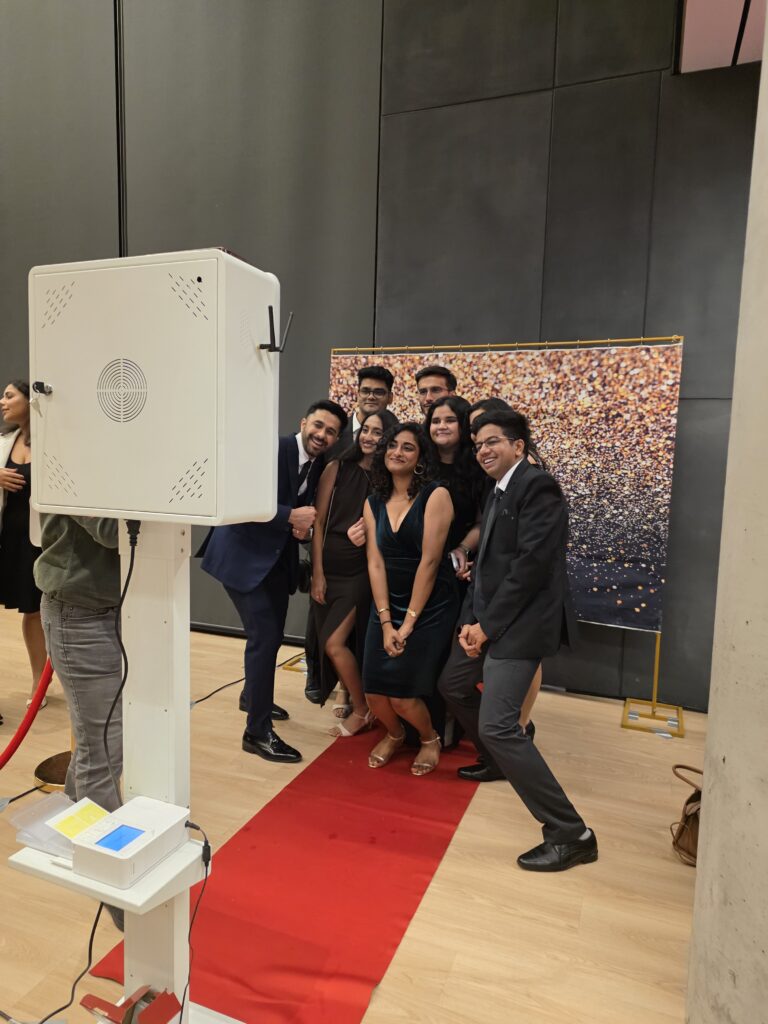
A fundraiser photo booth should give guests a welcoming activity while protecting the event’s main purpose. Plan it around the appeal, auction, meal, and programme, and decide whether participation is included, sponsored, or connected to a clearly explained contribution. The booth should never leave an attendee uncertain about what they are paying for or where a donation goes.
For a Toronto charity dinner, community benefit, or organised fundraising reception, the event photo booth options provide a starting point. Share the actual event format with the supplier. A small community fundraiser and a formal donor dinner may need the same kind of photograph but very different staffing, branding, and scheduling.
Choose the booth’s role before setting a target
Start with the experience you want guests to have. The booth might be an included thank-you, a sponsored attraction, or an optional activity with a contribution collected separately by the organiser. Those are different arrangements. Choose one and describe it consistently on signs, tickets, and staff briefings.
Do not build a fundraising forecast by multiplying every attendee by an assumed photo purchase. Some guests will not participate, some will visit in groups, and others may return more than once. If you need a budget forecast, keep the booth expense visible and treat any related contributions as uncertain unless they are already committed.
A sponsor can cover the experience without the booth collecting money at all. That arrangement may simplify the guest journey, but the sponsor’s recognition still needs to be agreed. Confirm what appears on the print, where signage sits, and whether the organiser has promised any other benefits.
Keep the appeal separate from the activity
The main fundraising appeal deserves attention. Put it on the programme and decide when the booth pauses so guests can hear the speaker. Do the same for an auction, presentation, or important acknowledgment. A photo countdown and a lively queue should not become accidental background entertainment during a serious message.
Give the attendant a cue from one event contact. The host may know that the appeal will start after a particular speech, while the supplier only sees a written time. A clear cue handles ordinary programme changes without forcing the attendant to judge the emotional tone of the room.
After the appeal, let guests move naturally back into conversation and activities. Avoid using the booth as a reward that pressures people to disclose how much they gave. A contribution level is not a photo prop, and guests may prefer to support the cause privately.
Make contribution arrangements understandable
If participation involves a payment or suggested contribution, put the amount and the arrangement in plain language before guests queue. State who handles the money and what the attendee receives. The organiser should approve that wording and make sure the collection process matches it.
Keep financial transactions with the event’s authorised team. A booth attendant should not be expected to answer questions about charitable receipts, payment processing, or how funds are allocated unless that role has been specifically agreed and supported. Those questions belong with the organiser’s finance or guest-services contact.
Do not describe an amount as a tax-deductible donation or promise a receipt without confirmation from the organisation responsible. If guests have questions, direct them to that organisation. The photo activity can remain clear and welcoming without making claims about the financial treatment of a contribution.
Design sponsor recognition around the photograph
A sponsor logo can identify who supported the booth, but it should not overwhelm the portrait. Agree on the event name, cause, date, and sponsor placement before artwork begins. A hierarchy helps: the event identity can lead, with sponsor recognition in a supporting position.
Ask for approved logo files and a single consolidated list of required names. Last-minute sponsor additions can make a previously readable print crowded. If several supporters need acknowledgment, a nearby sign or event programme may serve them better than shrinking every logo into the photo border.
Review the design at its actual size and check it in both colour and any chosen monochrome format. A logo that depends on a subtle colour may lose clarity in a black-and-white layout. Have the event organiser approve the final proof rather than relying on separate approvals of individual logo files.
Choose an output that suits the audience
Printed portraits can act as a thank-you guests take home. Digital images can be useful when attendees prefer a file or the event has limited space for collecting physical items. A photo keychain adds a different fulfilment task, while a video experience introduces another style of participation.
| Event need | Format to consider | Operational detail |
|---|---|---|
| A simple included keepsake | Print portrait | Explain how group copies are handled |
| A sponsor-branded digital moment | Digital photo or video | Approve the sharing screen and final artwork |
| A physical fundraising favour | Photo keychain | Confirm quantities and collection responsibility |
| A formal donor reception | Portrait-focused booth | Keep the design and props suitable for the event tone |
Do not assume one output suits every attendee. An understated portrait can be available even if the event also includes playful props. Guests supporting a serious cause may appreciate the choice to participate quietly, particularly when they have a personal connection to the work being supported.
Protect dignity in the event story
The photo design should reflect the organisation’s own approved language. Avoid adding a dramatic slogan, sensitive image, or personal story simply to make the booth feel more connected to the cause. People attending may include beneficiaries, families, staff, volunteers, and donors with different relationships to that story.
Do not use a guest’s photograph to imply that they endorse a public campaign unless the organiser has arranged that use. Participation in a private event is not the same as agreement to appear in promotional material. Decide how the gallery will be handled and give guests a practical way to ask about image use.
If the fundraiser involves children or vulnerable participants, the organiser should establish the participation and sharing approach before the event. The attendant needs clear instructions that can be followed calmly. Do not rely on a busy queue to resolve sensitive decisions about photographs.
Give volunteers defined responsibilities
A volunteer can welcome the next group, explain where to collect a keepsake, or direct a guest to the donation desk. Those tasks are useful because they let the attendant concentrate on the equipment and portrait. Avoid assigning a volunteer several jobs in different parts of the room at the same time.
Provide a short briefing with the booth hours, any planned pause, the contribution wording, and the name of the event contact. Include what volunteers should do when they do not know an answer. A polite referral to the organiser is better than an improvised explanation about money or sponsor arrangements.
Arrange breaks and a handover if volunteers change during the evening. The next person needs to know whether there are uncollected items or an upcoming programme pause. A simple written note can prevent guests from receiving different instructions depending on who happens to be standing beside the booth.
Keep the queue away from fundraising stations
Silent-auction tables, donation desks, and registration areas need space for people to stop and read. A photo queue can unintentionally block them if the booth is placed too close. Mark the waiting area on the floor plan and consider the direction guests will face while they wait.
The booth should be visible, but it does not need to sit beside the loudest attraction. Guests need to hear instructions, and an organiser should be able to reach the station without crossing a stage or a formal presentation area. Confirm the operating footprint and cable route with the supplier.
For venues with a separate reception and dining room, decide whether the booth stays in one location. Moving equipment during the event is a distinct request that needs time and access. If guests will naturally return to the reception area after dinner, keeping the station there may be more practical than planning a hurried relocation.
Build a realistic example into the brief
Consider a hypothetical community dinner with registration, a meal, a short appeal, and a silent auction. The booth could open during the arrival reception, pause for the meal and appeal, then reopen while guests browse the final auction lots. The organiser would keep the queue away from bid sheets and assign one volunteer to explain the included keepsake.
In that example, a sponsor’s recognition belongs on the approved photo border and a nearby sign. Donation collection remains at the event’s own desk. The attendant is told when the appeal begins, and the event contact handles any change. Each element supports the fundraiser without asking the booth to perform every fundraising function.
The exact sequence will differ for a walk-in benefit or a school event. Use the example to identify responsibilities, not as a promise of a particular attendance level, contribution total, or booth capacity. The supplier should confirm the equipment and operating plan for the actual venue.
Prepare for the last part of the evening
A fundraiser often becomes busiest just before guests leave: auction items are collected, payments are completed, and people look for coats or transport. Decide whether the booth remains open through that period or closes earlier. A late photo queue should not cross the collection desk or obstruct the route out of the room.
Give guests a clear final invitation while there is still time to participate. Ask the supplier how it handles groups already waiting at the booked closing time, and have the organiser communicate the agreed approach. Avoid promising an extension without checking availability and the quote.
Assign a person to collect any remaining keepsakes and to receive the gallery information. If a sponsor expects a selection of images, the organiser should review which photographs can be shared before sending them. Keeping the close organised protects both guest belongings and the care that went into the event’s image-use decisions.
Review costs and results without overstating impact
Compare the quote with the programme, required artwork, preferred output, and any sponsor obligations. The rental cost guide explains the main cost variables. The space and inclusions guide helps clarify the equipment requirements, and the brand-activation planning guide covers coordinated event design.
Afterwards, separate booth use from fundraising results. Session counts, guest feedback, and sponsor feedback can describe the experience. They do not prove that the booth caused donations. Record what was observed and what the organiser would change, such as a clearer sign or a better programme pause.
Send the event purpose, venue, date, programme, and preferred contribution arrangement through the quote request form. Include sponsor artwork and collection responsibilities early. The strongest fundraiser booth plan gives guests an enjoyable keepsake while keeping the cause, the money, and the event’s responsibilities clear.