
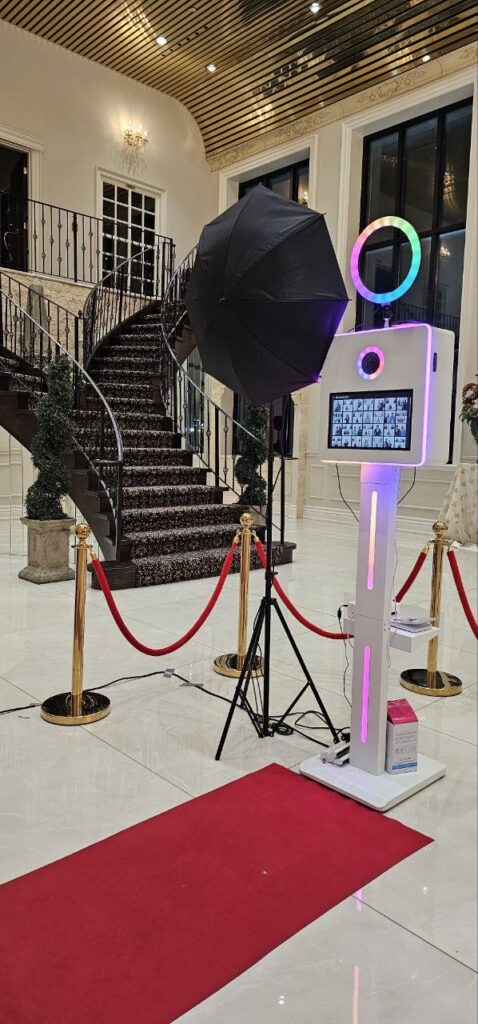
A grand opening photo booth should help visitors understand the new business and enjoy a clear, welcoming activity. Place it where people can find it after entering, choose a photo design that identifies the business, and keep the queue away from the sales floor and ribbon-cutting area. A well-planned booth supports the opening without making guests choose between the photograph and the reason they came.
Start with the corporate photo booth options and describe the business, venue, expected visitor flow, and launch programme. A Toronto storefront opening has different constraints from a new office reception or a large showroom event. The planning question is how the booth fits into the visitor journey from arrival to departure.
Give the booth one clear job
Decide whether the main purpose is to welcome neighbours, create a souvenir, support a product demonstration, or provide an activity while visitors wait for a tour. These goals can overlap, but one should lead the design. A booth that tries to collect information, explain a product, promote an offer, and entertain a family in the same short session can become confusing.
Write a plain sentence describing the experience: “Guests take a photograph with our opening-day design and leave with a keepsake.” If a visitor needs a much longer explanation to understand the activity, simplify it. Put detailed product information with the staff who can answer questions rather than hiding it inside the photo interaction.
Keep the brand connection visible but proportionate. A business name, location, and opening date may be enough. A complete service menu on a small print will be difficult to read and will take space away from the photograph. The booth should make the memory identifiable, not turn the guest’s portrait into a crowded advertisement.
Map the route from the door
Walk the venue as a first-time visitor would. Identify the welcome point, the main attraction, the place to ask questions, and the exit. The booth should sit naturally on that route without occupying the only direct path. A staff member should be able to point to it without sending people through a checkout queue or a restricted work area.
For a storefront, keep the entrance clear. A queue immediately inside the door can make the opening look full even when there is space farther in. It can also hide products or prevent someone from approaching the welcome desk. Check the room with furniture, displays, and promotional signs in place, not only on an empty floor plan.
If the opening includes tours, decide whether guests take their photograph before or after the tour. Before can provide something to do during a wait; after can leave visitors with a souvenir as they depart. Avoid placing the booth in the middle of a timed tour unless the guide has built that pause into the programme.
Protect the ribbon-cutting moment
A ribbon cutting, welcome speech, or first demonstration needs a clear audience. Put the expected start time on the booth brief and agree whether the activity pauses. The attendant should receive a cue from a named organiser rather than having to infer what is happening from applause elsewhere in the room.
Leave enough separation between the booth and the formal photo area that neither background appears accidentally in the other. The official opening photograph may involve invited guests, staff, and a sign that needs to remain visible. The booth can resume afterwards, when visitors are ready to mingle.
Build flexibility around the programme. If an invited speaker arrives later than expected, the host may need to adjust the sequence. Confirm who can authorise changes to booth operation and who communicates with the supplier. Avoid letting several employees give conflicting instructions about a pause or an extension.
Choose a format visitors can understand quickly
A print booth offers an obvious exchange: step in, take a portrait, receive a photograph. A digital booth removes the physical print but requires a clear sharing process. A video experience can attract attention, although it may need more explanation and a different operating footprint. Select the format around the visitor mix and the room.
| Opening situation | Possible format | Main planning question |
|---|---|---|
| Visitors arriving throughout the day | Still-photo booth | How will guests see that the activity is open? |
| A reception with a planned programme | Print or digital booth | When does the booth pause for remarks? |
| A visual product or fashion launch | Branded portrait or video experience | Does the product remain clear in the final image? |
| A family-oriented opening | A simple portrait with optional props | Can groups participate without complicated instructions? |
Test the interaction in words before approving equipment. If staff cannot explain it in a short sentence, visitors may hesitate. A welcoming attendant can guide participation, but the event should not depend on every guest already knowing what a particular booth type does.
Approve artwork as a small printed object
Review the design at its actual output size. A logo that looks balanced on a laptop can become too small on a photo strip. Check contrast, spacing, spelling, and how much room remains for the portrait. Use a final logo file supplied by the business rather than recreating a mark from a screenshot.
If an address is included, choose the detail guests need to identify the new location. A long address, phone number, website, social handle, slogan, and date can overwhelm a small frame. Decide which element matters most and let other event materials carry the rest.
A QR code is a separate design decision. It needs a useful destination, enough space, and a real scan test on the final proof. Do not send guests to a temporary page that will disappear after opening day. If the link promotes an offer, confirm that the offer and its destination are approved and current before printing.
Separate photographs from contact collection
Taking a souvenir photo and joining a mailing list are different choices. Plan the experience so visitors understand what they are being asked to do. A guest should not discover an unexpected marketing request only after posing for a photograph.
If the organiser wants an optional sign-up, keep the wording and handling process clear and have the business approve it. Decide who receives the information, how it will be used, and who answers questions. This should be agreed before the opening rather than improvised by an attendant during a busy session.
Keep staff conversations about purchases away from the photo handover when they would hold up the queue. Visitors who want a detailed discussion can move to a separate consultation or demonstration point. This allows the booth to remain welcoming while sales staff spend time with people who have asked for help.
Use staff roles that match the event
The booth attendant runs the photo experience. A host or staff member welcomes visitors and explains the opening. A business representative answers product questions. Treating those as distinct roles prevents the attendant from being asked to quote services or explain terms they have not been authorised to discuss.
Assign an event contact who can make practical decisions. That person should know where the supplier unloads, where equipment can be stored, and how the opening programme may change. They should also be reachable without having to leave a customer conversation every time a small question arises.
Consider the staff’s own photographs. A team portrait before public doors open may be easier than gathering employees while they are working. Confirm that the booth will be operational at that time if it is important. Early access for setup does not automatically mean an additional staff session is included.
Plan for short visits and changing demand
Some guests will stay for the whole programme, while others may visit briefly between errands. Make the booth’s opening hours easy to see and avoid a process that requires visitors to return much later for a simple keepsake. If collection is separate, explain where it happens before the guest leaves the station.
Use a short queue that does not hide the activity. An organiser can invite visitors to return after browsing if the wait grows, but should not promise an exact waiting time without observing the actual session pace. Group size, retakes, output selection, and guest questions all affect the flow.
For a hypothetical opening with a ribbon cutting followed by a busy reception, the useful approach may be to close the booth briefly for the formal moment, then reopen with a host helping groups prepare. For an all-day drop-in, a consistent sign and clear station position may matter more than repeated announcements.
Check access before opening-day deliveries arrive
Grand openings often involve several suppliers working in the same limited arrival window. Put booth delivery on the same access schedule as catering, furniture, signs, and any entertainment. Ask who controls the loading space and what happens if another delivery is still there when the booth arrives.
Confirm power and the route for cables with the supplier and venue. Keep boxes, merchandise, and spare decorations out of the operating area. In a new business, the room layout may still be changing shortly before opening, so send an updated floor plan if the planned photo corner moves.
The downtown access guide helps with building and loading questions. The company-event and brand-activation guide covers the broader experience, while the design checklist helps organise artwork approval.
Evaluate what the booth contributed
After the event, review practical observations: whether visitors could find the station, whether the queue blocked anything, whether the artwork was readable, and whether the selected output was useful. If the supplier provides a session count, keep it separate from visitor numbers and sales. One group can appear in several photographs, and a photograph does not establish a purchase.
Save the approved design and a short note about what you would change for a future store event. Record operational details while they are fresh, such as a better loading time or a more visible station position. This makes the next event easier to plan without inventing a return-on-investment claim from a gallery alone.
Send the venue, opening date, programme, visitor profile, and preferred output through the quote request form. Include the one job you want the booth to do. A clear brief makes it easier to fit the photo experience into a grand opening that remains focused on welcoming people to the business.