
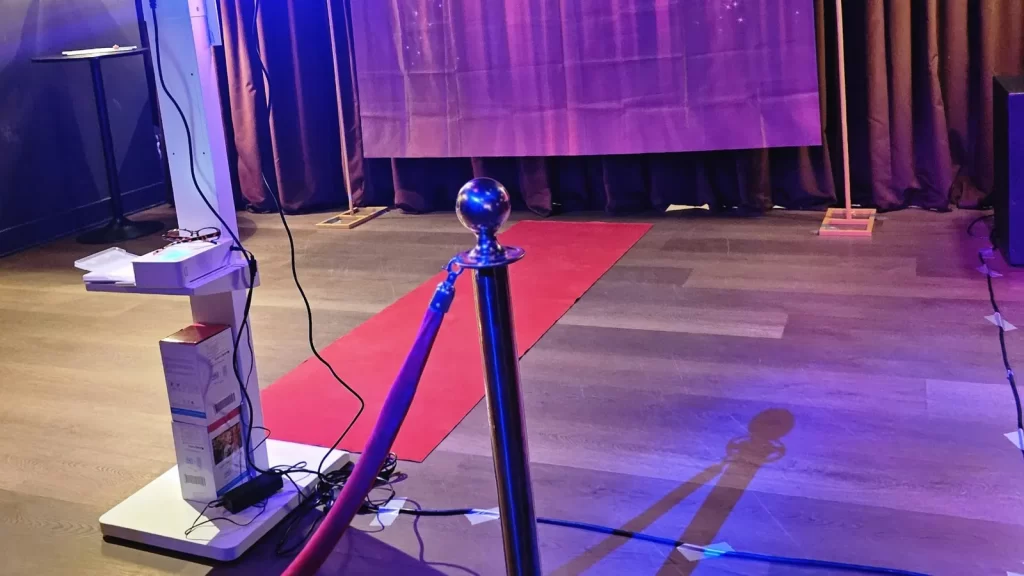
A Diwali celebration photo booth should reflect the host’s own celebration, show guests and clothing clearly, and fit around the event’s programme. Agree on the wording, colours, symbols, and photo-sharing approach before designing the backdrop. A welcoming portrait experience can feel festive without making assumptions about every family’s traditions or every guest’s reason for attending.
For a Toronto family, community, or workplace gathering, begin with the available photo booth options and explain the event format. A family dinner, a cultural programme, and an office reception need different schedules and different design approvals. The host should define the celebration; the booth should support that definition.
Let the host set the meaning and tone
Ask the organiser which words and visual elements they want to use. Diwali celebrations can be personal, communal, religious, cultural, or a combination, and the booth should not reduce that variety to a stock theme. A supplier can prepare the visual experience more accurately when the host provides a clear brief.
Do not add sacred wording or imagery merely because it appears in a decoration search. The organiser should choose what belongs in a photo setting and what should remain elsewhere in the event. If a design element has a particular meaning to the host, preserve it accurately rather than treating it as interchangeable ornament.
A simple greeting, event name, and date can provide enough context. Some hosts may prefer a family name; others may want an organisation or community identity. Decide that hierarchy early so the final print feels intentional rather than crowded with every possible detail.
Choose colours that support the portrait
Guests may arrive in clothing with rich colour, detailed embroidery, jewellery, or reflective fabric. Consider how the backdrop will work with that range. A background can be celebratory while still leaving enough visual calm for faces and clothing to remain clear.
A single strong colour with restrained decorative detail may work better than a dense pattern behind every guest. Ask the supplier about lighting and contrast with the chosen booth format. The colour of a backdrop in a product photograph is not a promise of how every outfit will appear under event lighting.
Review the image composition, not just the room decoration. Check where heads and shoulders will sit, what appears behind them, and whether a large title will be covered by a group. If the main design disappears whenever people stand in front of it, adjust its placement before the event.
Approve greetings and names in the final layout
If the template uses more than one language, have the host nominate a fluent reviewer for each. Check spelling, punctuation, accents, and the intended greeting. An accurate phrase can still become difficult to read if a font does not support the text properly or the line breaks are awkward.
Review the actual print proof at its intended size. Do not approve a translation in a message and assume the production layout is also correct. Ask the reviewers to see the same final version, especially when names and dates appear beside the greeting.
Keep one organiser responsible for sending the approved wording. Conflicting revisions from several family or committee members can create uncertainty about which version is final. A clear approval path respects the importance of the language and makes the design process more reliable.
Keep decorative lighting separate from equipment needs
Lighting can be an important part of the room’s atmosphere, but the photo area still needs conditions suitable for the equipment. Tell the supplier about decorative lights, projections, or changing stage lighting near the booth. Ask how those elements will affect the selected portrait style.
Open flames, heat sources, incense, loose powders, and other materials require venue and supplier agreement. Do not place them on or close to booth equipment simply to bring the decor into the frame. The host can identify suitable alternatives that preserve the intended appearance without introducing unplanned conditions.
If a floor decoration is part of the event, protect it from the queue rather than directing guests across it. The booth, backdrop, waiting area, and walking route should be planned together. A decorative feature should not become an obstacle guests have to negotiate while following camera instructions.
Choose a keepsake that guests can use
A printed portrait can be a meaningful take-home item, while a digital file lets guests keep the image on their phone or share it privately. A video experience offers movement but is a different kind of keepsake. Decide what the event wants to provide before choosing equipment.
| Celebration priority | Format to consider | Detail to confirm |
|---|---|---|
| Family and friend portraits | A still-photo booth | Group framing and printed or digital output |
| A formal evening keepsake | A portrait-focused print format | Backdrop contrast and a readable greeting |
| A lively reception activity | A video booth | Operating space and suitable guest participation |
| A small physical favour | Photo keychains | Quantity, assembly, and collection arrangements |
For clothing-focused portraits, ask whether the selected framing shows the part of the outfit guests want to capture. Do not assume every booth offers a full-length image. The exact setup should be discussed with the supplier, particularly when groups or large accessories are involved.
Fit the station around the programme
Ask the host to identify any welcome, meal, ceremony, performance, or presentation that needs the room’s attention. Do not assume which elements a Diwali event will include. Once the programme is known, agree on booth opening times and any pauses.
A booth in the same room as a performance may need to pause so guests can listen and watch. If it is in a separate reception area, the organiser should still decide how to encourage guests to join the programme. The attendant needs a cue from a named contact when timing changes.
For a family gathering, a portrait period before the meal may help capture groups while everyone is present. For a community event, photos may work better during a reception interval. These are options to consider, not a prescribed order for the celebration.
Make group participation welcoming
Families, friends, colleagues, and community groups may all want different combinations. Invite people to gather before their turn so the operating area does not become a place to search for missing guests. A host who knows the attendees can help without making the process feel formal.
Offer a straightforward pose as a starting point, then let guests choose whether to be playful. Avoid prompts that assume a particular family relationship or shared language. A couple, a group of friends, and a multigenerational family should each be able to use the station comfortably.
Plan for guests who prefer a seated portrait or need a clear route. Ask the supplier about the chosen equipment’s capabilities in advance. Keep bags and coats outside the operating space, with a suitable nearby place to set them down if the venue allows it.
Use props that belong to this event
Props can add variety, but they are optional. Guests may prefer a portrait that shows their own clothing and accessories without adding anything else. A small set of approved signs can offer a second version without turning the station into a costume activity.
Ask the organiser to review every word and image on the prop list. Avoid generic items that turn cultural dress or identity into a joke. A greeting selected by the host, a family name, or a simple event message can be more appropriate than an assortment chosen only because it is colourful.
Keep borrowed personal items separate from hired props. If a host brings a meaningful decorative object for photographs, agree on how it will be handled and who collects it afterwards. The booth table should not become an unlabelled storage place for valuables.
Plan privacy and gallery distribution
Choose who receives the full gallery and how guests will obtain their own images. A private family album, a community newsletter, and a company’s public social page are different uses. Explain the intended arrangement so guests know what participation means.
Provide a practical way for someone to request a private photograph or decline wider publication. With children, follow the organiser’s agreed approach to participation and image sharing. The attendant needs clear instructions that can be applied consistently, rather than being asked to make those decisions during a busy session.
A guest should not have to make a public social post to enjoy the activity. If the organiser offers an event hashtag, make it an optional invitation. A celebration can be well documented through a private collection without treating every portrait as promotional content.
A sample plan for a community reception
Imagine a reception with arrivals, a welcome, a cultural programme, and food. The booth opens during arrivals with a host-approved greeting and a backdrop that leaves room for group portraits. It pauses for the welcome and performances, then reopens during the social interval.
In this example, one committee member approves multilingual text, another manages programme cues, and the supplier runs the station. The queue stays away from any floor decoration and from the food-service route. Guests can choose a simple portrait or an optional prop without being directed into a single style.
The same structure can be adapted to a family or workplace event, but the host decides what changes. The example is about assigning responsibilities and protecting the programme, not defining how a Diwali celebration should look.
Keep the closing arrangements personal
Before the event ends, have the organiser collect remaining prints, borrowed decorations, and any personal items left near the station. If several families contributed objects, label their storage separately from the supplier’s equipment. This is particularly useful when the room must be cleared quickly after a community booking.
Confirm the gallery recipient and the intended distribution message while the event details are still fresh. A short note explaining how guests can find their own images is more helpful than sending an unexplained link to a large group. Keep the sharing method consistent with the choice made before the celebration.
Confirm the room and supplier access
Check the setup route, power arrangement, station footprint, and access time with the venue and supplier. For a Toronto event building, include any unloading or elevator requirements. If the room is being decorated by several people, share the agreed booth area so it remains available when equipment arrives.
The space and rental-inclusions guide helps with the practical brief. The print and backdrop checklist supports artwork approval, while the GTA setup guide helps coordinate delivery.
Send the date, venue, audience, programme, preferred output, and approved design direction through the quote request form. Include any language or participation requirements at the start. A thoughtful Diwali photo booth gives guests a welcoming portrait experience while respecting the celebration the host has chosen to create.