
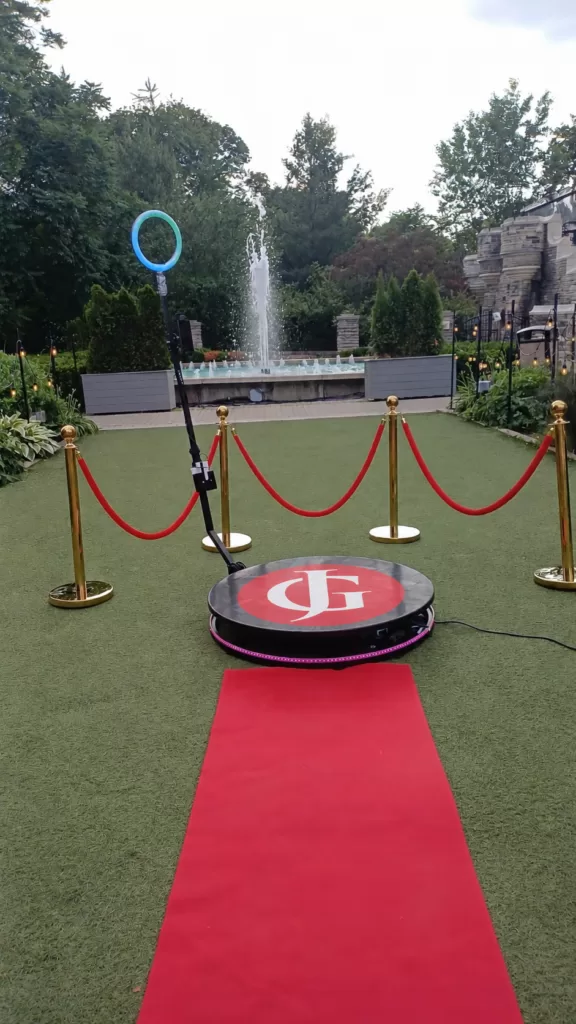
A golf tournament photo booth is usually easiest to manage at the clubhouse reception, registration area, or post-round gathering. Plan it around how players arrive and finish, decide whether you want team portraits or relaxed celebration photos, and keep the station away from equipment traffic. The booth should fit the tournament timetable without slowing registration or the awards programme.
For a Toronto or GTA company tournament, begin with the corporate event photo booth options. Explain whether the day is a staff outing, a client event, a fundraiser, or a competitive tournament. That purpose changes the sponsor artwork, guest tone, and practical use of the finished photographs.
Choose the moment in the tournament day
Registration, the period before play, the return from the course, and the awards reception each offer a different photo opportunity. Registration portraits can show complete teams before they separate, but guests may be focused on checking in and preparing equipment. Post-round photographs are more relaxed, although teams may return at different times.
Pick the most valuable moment before requesting operating hours. Do not assume that a booth booked for an evening reception can also cover early registration. If both sessions matter, describe the gap and ask the supplier how it would be handled. The equipment may need to remain in place even when guests are on the course.
A tournament organiser can identify the arrival pattern and the expected programme. Share that plan with the booth supplier, including any staggered start or return arrangements. The supplier does not need to know every detail of the golf competition, but does need to know when guests will actually be available for photographs.
Make team portraits easy to organise
If team pictures are a priority, use the same team names or numbers as the registration list. Ask a tournament volunteer to gather each group and confirm that everyone is present. The photo attendant should not have to reconcile player substitutions or find a missing teammate while other groups wait.
Keep team identification separate from the printed design unless the supplier has agreed to a workflow for changing it. A single event template can work for every group, while the organiser keeps a private record of the team order if needed. Changing text for every session adds another approval and accuracy task.
Agree on whether guests want a formal team pose, a playful version, or both. Do not make multiple versions compulsory when the schedule is tight. A clear portrait can be more useful for a tournament album than a large number of rushed images with someone looking away.
Choose keepsakes around how guests will carry them
Players may have bags, clubs, coats, and other belongings with them. If a print is given out before the round, consider where it can be kept safely. A digital file may be more convenient during registration, while a print can work well at the clubhouse reception when guests are no longer carrying equipment.
Photo keychains are another possible favour, but their quantity and collection process need to be agreed. Do not assume every player will receive one unless the quote confirms enough pieces. If favours are collected later, use a clear station and named organiser so guests do not search for their item during the awards.
A video booth can suit a lively post-round celebration, but it is a different experience from a team photograph. Explain the difference when choosing. For an event record that needs identifiable teams, still portraits should be planned explicitly rather than treated as an automatic extra to video.
Use golf details without crowding the design
A tournament name, date, and small golf-related design element can establish the occasion. Keep enough space for the players’ faces and avoid placing a logo where a guest’s head will cover it. A photo template is not the same layout as a poster or a sponsorship board.
Ask the organiser which sponsor marks have been approved for the booth. A title sponsor may have different placement from other supporters, and a charity may have its own brand requirements. Use a final combined proof so the organiser can see how all identities work together.
If a winner’s image will be used afterwards, avoid putting a winner label on every guest’s print. A general event design works throughout the day. Award-specific images can be handled separately if that service is arranged, or the organiser can use the actual presentation photographs for that purpose.
Keep real golf equipment out of a busy photo queue
Golf clubs and bags can create awkward handling in a small photo area. Decide where equipment will be stored before guests join the queue. Props intended for the booth should be approved by the supplier and appropriate for the space, rather than borrowed spontaneously from a player’s bag.
A simple cap, event sign, or themed backdrop may provide enough visual context. Avoid asking guests to swing anything in a crowded area. The event organiser should follow the venue’s rules about equipment, footwear, and where players may gather inside the clubhouse.
Think about the path between the course, changing facilities, and the reception. A booth placed directly on that route can create a bottleneck when several groups return together. Position the waiting area so someone carrying a bag can pass without entering the photo frame or crossing equipment cables.
Prepare for weather changes without relying on them
Even when play takes place outdoors, the booth can be planned indoors from the beginning. A clubhouse or covered event room may offer a more predictable environment, subject to venue and supplier approval. The location should still have the space, access, and power arrangement required for the chosen equipment.
If an outdoor photo station is requested, discuss protection from rain, wind, direct sun, and unsuitable surfaces with the supplier. A decorative umbrella is not the same as an agreed equipment shelter. Set a decision time and a named person who can move the plan to the approved alternative before guests arrive.
A weather delay can change when players return and when dinner begins. Include the booth contact in the event communication plan. Do not assume the operating hours automatically shift with the tournament; confirm how changes are handled so the organiser can make an informed decision.
Fit photographs around food and awards
Guests returning from a round may first want refreshments, a seat, or a change of clothing. A photo invitation can work after those immediate needs are met. Ask the host to explain when the booth is open instead of sending every returning team straight into another queue.
Pause or reduce activity during formal awards if the station would distract from the stage. The supplier needs a clear cue and a plan for guests already waiting. A host can invite those groups to return after the presentation, keeping the recognition moment intact.
For a hypothetical tournament reception, the booth might open while players mingle, pause for dinner remarks and awards, then reopen for informal team and sponsor portraits. That sequence is a planning example rather than a standard duration. The actual programme should guide the quote.
Keep fundraising and sponsor requests distinct
Some golf tournaments support a cause, while others are primarily social or commercial. Do not assume the booth has a donation role just because the event is a fundraiser. Decide whether it is included for guests, sponsored, or linked to a separate contribution managed by the organiser.
If sponsors want photographs for their own communication, agree on the intended use before collecting a selection of images. A guest may be comfortable taking a private keepsake without wanting to appear in an advertisement. The organiser should manage that distinction and provide the supplier with workable instructions.
A session count is not a sponsor lead count. One team may visit repeatedly, and a group portrait can contain several people. Evaluate the booth as an event experience unless the organiser has established a separate, clearly explained method for gathering optional enquiries.
Give the venue a complete setup brief
Share the selected location, operating hours, unloading arrangements, and any period when equipment remains unattended by guests but still occupies space. A clubhouse may need the same room for another part of the tournament. Confirm that the booth position remains available for the full agreed period.
Ask where supplier vehicles may unload and whether equipment must travel through guest areas. Include any stairs, narrow doors, or restrictions on moving through the clubhouse. A photograph of the proposed corner helps, but a clear access description is equally useful.
For practical questions, read the GTA delivery and setup guide and the guide to rental space and inclusions. If the tournament supports a charity, the fundraiser booth planning guide explains the separate guest, sponsor, and contribution decisions.
Plan a workable approach to late-arriving teams
If one team returns after the reception has started, avoid making its members feel they have missed the whole photo experience. Tell the host which booth period remains available and where the team can leave its equipment. A clear invitation after the awards can work better than interrupting the presentation to gather a late group.
The organiser should also decide which photographs are essential and which are optional. A portrait of a sponsor’s invited team may be important, but it should be arranged directly with those guests. Do not hold the entire reception while searching for one player who has already left.
When a complete team cannot be photographed, take the available group if they want a picture and describe it accurately in any later album. Do not label it as the full team or promise to add a missing person digitally. A useful event record can acknowledge the day as it happened without creating extra production expectations.
Build a short checklist for the tournament organiser
- Choose whether registration portraits, post-round photos, or both are required.
- Confirm the team naming system and who gathers players.
- Approve one final event and sponsor design.
- Agree on print, digital, video, or favour output.
- Confirm the indoor location or outdoor fallback.
- Keep the queue clear of golf bags and the route to the reception.
- Name the person who communicates schedule changes.
- Assign responsibility for the gallery and remaining keepsakes.
Before sending the brief, check that the selected booth hours match the period guests can use it. A full tournament day can include long stretches when everyone is on the course. Paying attention to the actual photo opportunity is more useful than treating the entire tournament timetable as one continuous booth session.
After the event, record which photo period guests used, whether team gathering worked, and whether the keepsake was convenient to carry. Those observations help the next organiser make a better plan. Send your date, course or venue, programme, and preferred output through the quote request form to build a photo experience around the tournament you are running.