
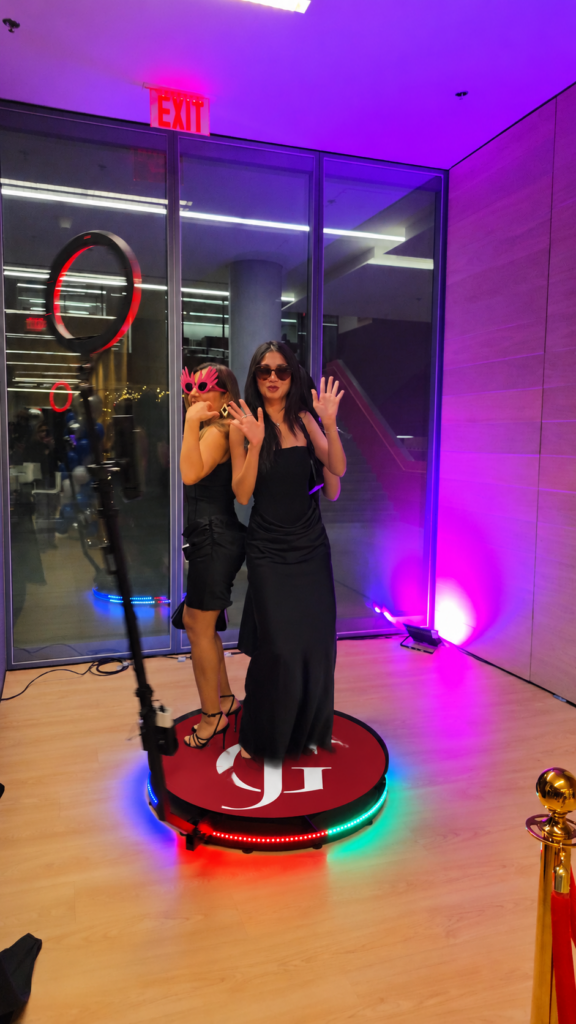
A New Year’s Eve photo booth needs a clear plan for the countdown. Decide when guests take their main portraits, how the station pauses around midnight, and which year appears on the design. Keep the queue clear of the celebration area and give guests a straightforward way to collect or download their photographs before they leave.
Start with the photo booth formats available for Toronto events and explain whether the party is a private gathering, a company celebration, or a ticketed reception. Midnight is a shared focal point, but the rest of the evening can vary considerably. The booth should support the event’s own rhythm rather than assume every New Year’s party follows the same programme.
Set the relationship between photos and midnight
Decide whether the booth is mainly a pre-countdown activity, a post-midnight celebration, or both. Guests may want a polished portrait when they arrive and a more playful picture later. Those are different moments, and a quote should reflect the hours when each is available.
Avoid making midnight the only chance to get the desired image. The countdown can bring everyone into one part of the room at once, which makes it a poor time to organise individual groups. Take important portraits earlier so guests can join the celebration without wondering whether they are missing their turn.
If the host wants a photograph of the entire room at midnight, discuss separate event photography. A booth focused on one group cannot automatically document the countdown, a stage, and all the guests. Clarifying that distinction prevents a keepsake service from being treated as complete event coverage.
Choose the year and wording carefully
A New Year’s Eve event crosses a calendar boundary. Ask whether the print should identify the date of the party, welcome the incoming year, or use a general celebration message. Each can work, but the organiser should choose deliberately before approving artwork.
For example, an event held on December 31 can display “New Year’s Eve” with the event date, or “Welcome” followed by the coming year. Check the exact wording with the host. Do not assume the event’s advertised name and the print year are interchangeable.
If different designs are wanted before and after midnight, confirm whether the supplier can support that change and who gives the cue. A single design that works throughout the evening may be simpler. It also avoids the possibility of guests receiving an unexpected version during a busy transition.
Build a theme that still photographs people well
Black, white, metallic accents, and bright colour palettes can all suit a New Year’s celebration. Choose the backdrop with the expected clothing and lighting in mind. Reflective decorations and small lights may create an attractive room feature, but the final portrait should remain clear and the faces should stay central.
Use one or two strong decorative elements rather than surrounding the booth with every possible party accessory. A clean backdrop with a readable event title can feel more intentional than a crowded arrangement of streamers, signs, balloons, and tiny text.
Ask the supplier how the chosen backdrop works with the booth’s lighting and framing. A photograph of the decorated corner from a phone is not the same as the final booth composition. Check where people stand and what appears behind their heads, not only how the corner looks from across the room.
Keep props practical during a busy party
Choose props guests can hold and return easily. A small selection of signs, glasses, or event-specific objects can encourage variety without creating a large sorting task. Keep broken or unsuitable items out of circulation and give the prop table a clear position outside the operating area.
Confetti, loose glitter, and party sprays need venue and supplier approval. They can affect the floor, equipment, and cleanup arrangements. Do not bring them into the booth because they are being used elsewhere at the event. A controlled visual design can create a celebratory image without loose material.
Allow a prop-free portrait throughout the evening. Some guests will want a simple photograph with a partner or friend, especially if they have dressed for a formal event. The booth can be lively without requiring everyone to use the same joke or accessory.
Choose still photographs, video, or a combination
A printed photograph creates an immediate keepsake, while a digital file is useful for guests who prefer to keep the image on their phone. A 360 video booth offers movement and a different kind of souvenir. Choose based on the experience the party needs, not on the assumption that all formats produce the same result.
| Party goal | Option to discuss | Detail to confirm |
|---|---|---|
| A portrait to take home | A print booth | Print design, group copies, and collection point |
| A photo without a physical print | A digital booth | How guests receive the file |
| A moving celebration clip | A video booth | Operating clearance and guest instructions |
| A formal black-and-white portrait | A Glam Booth | How the design works in monochrome |
If two formats are included, give each a defined position and purpose. Guests should know whether they are joining a queue for a photograph or a video. The guide to how a 360 booth works explains the difference before you commit to a layout.
Leave room for the countdown crowd
Map where guests will gather when the countdown begins. That area may be near a screen, stage, dance floor, or balcony view. Keep the booth queue and its equipment outside the route guests will use to reach it.
Agree on a pause if the station would compete with the countdown. The attendant needs a reliable cue from the host and a plan for the people already waiting. A brief announcement can explain that the booth will reopen, if that is part of the agreed hours, rather than leaving guests uncertain.
After midnight, allow the room to settle before inviting everyone back at once. Guests may be greeting one another, finding belongings, or preparing to leave. A visible reopening and a calm host can work better than a sudden call for the whole room to queue.
Plan the late-night guest experience
As the evening progresses, guests may need more guidance or prefer simpler instructions. Keep the photo process clear and allow the attendant to manage participation within the equipment’s operating requirements. The event organiser remains responsible for broader guest management.
Have a host nearby who can help with a queue or direct guests to another activity. The attendant should not be left to resolve every issue in a crowded room. A named contact makes it easier to deal with a practical problem before it affects the station.
Keep drinks and food away from the equipment and provide an obvious place to set them down outside the working area, if the venue permits it. A guest should not have to balance a glass while trying to follow photo instructions. The surrounding layout is part of the experience.
Make the final photo period clear
Guests should know the booth’s closing time before the last few minutes. A final invitation from the host can help, provided it leaves realistic time for participation. Avoid promising that everyone can have another session if the remaining queue is already long.
Ask the supplier how it handles people waiting at the booked end time and whether an extension can be requested. Confirm any change before announcing it. A party that continues late does not automatically extend every supplier’s booking.
If guests collect physical keepsakes separately, keep that point visible until the items have been claimed or handed to the organiser. Put one person in charge of remaining prints or favours. Late-night cleanup should not be the moment someone discovers that personal photographs have been left on a table.
Consider transport, access, and pack-down
For a Toronto event building, confirm supplier access both before the party and after it ends. The loading route, elevator availability, and security contact may differ late at night. Put those details in the venue brief rather than assuming the same entrance remains available.
Make sure pack-down does not conflict with guests leaving through the same narrow route. The supplier and venue should agree on the sequence. Coats, rides, and guest departures can create a busy exit area even when the event itself has finished.
The downtown loading and access guide is helpful for hotels and condo venues. For a private home, explain the route from the vehicle to the photo area and where equipment can be moved without disturbing departing guests.
A practical sample plan for the evening
Imagine a party with arrivals, a seated meal, dancing, and a midnight countdown. The main couple and group portraits happen during the reception. The booth pauses for dinner announcements, then opens again during the social part of the evening. Before midnight, the host directs guests towards the countdown area and gives the attendant the agreed pause cue.
In that example, a design welcoming the incoming year works throughout the booking, so no last-minute artwork change is needed. The station reopens after the countdown only if that time is part of the quote. A separate event photographer covers the room-wide celebration if the host wants that record.
For a shorter house party, the plan might be simpler: one continuous pre-midnight period and a clear finish. Use the actual programme to decide. More operating hours are useful only when they match the moments guests can enjoy the booth.
Keep the gallery useful after the party
Choose one organiser to receive the final gallery information and confirm how guests can obtain their images. If the event has a shared online album, decide who may add photographs and whether it is intended to remain private. A late-night social post should not be the only way someone can recover a favourite picture.
Save the approved artwork with the event record, especially when it uses a year-specific design. Before reusing any file for a future celebration, check the date, wording, and guest-sharing destination again. A successful layout can be reused thoughtfully without carrying the wrong year into the next party.
Confirm the details before the celebration
Review the date and year on the proof, selected output, programme pauses, final operating time, and collection arrangements. The photo design checklist helps with approvals, and the rental cost guide explains the variables to compare in a quote.
Send the venue, expected guest mix, evening programme, and preferred booth format through the quote request form. Include the exact role of midnight in the plan. A New Year’s photo booth should give guests a clear moment to enjoy together while leaving them free to celebrate the change of year.